Seasonal · 5 min read
Your first ice fishing kit
Safety gear first, then the auger, rod and lures to get you through a first winter on the ice.
Updated
First Cast Fishing earns a commission when you buy through links on this site, at no extra cost to you. Affiliate disclosure
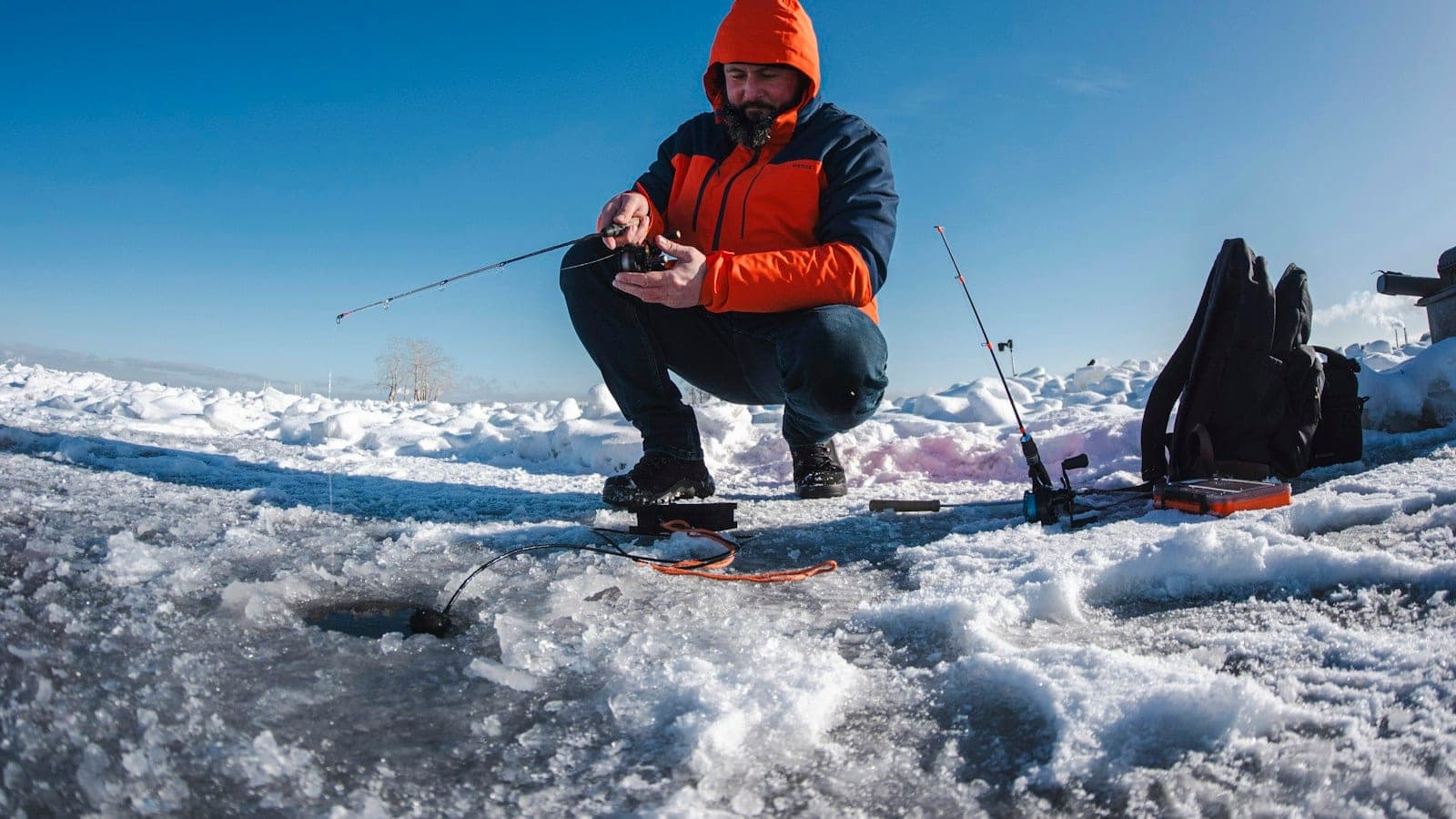
Ice fishing turns a frozen lake into the best fishing spot of the year. You can walk to water you could only reach by boat in summer, and fish such as perch, crappie, bluegill, walleye and pike stay active all winter. You do need some specialist gear. This guide covers what to buy first, in the order that matters: safety, then the hole, then the fishing, then staying warm.
Ice safety comes first
No ice is ever completely safe. Ice thickness varies across a lake, and it is thinner near inlets, outlets, springs, docks and anything that pokes through the ice, such as reeds or timber. Check the thickness as you go, and stay off if you are unsure.
Most state wildlife agencies publish guidelines like these for new, clear ice:
| Clear ice thickness | Generally considered safe for |
|---|---|
| Under 4 inches | Nobody: stay off |
| 4 inches | Ice fishing and walking on foot |
| 5–7 inches | A snowmobile or ATV |
| 8–12 inches | A car or small pickup |
| 12–15 inches | A medium pickup truck |
These figures are for new, clear ice. White or cloudy ice, and ice with snow on it, is much weaker; treat it as half as strong. Groups of people or large amounts of gear in one place need thicker ice than a single person. Ice that has thawed and refrozen, or that looks gray, dark or slushy, is unreliable at any thickness. Check your state's guidance before your first trip.
Buy these before anything else, and carry them every time you go out:
- Ice picks. Two spiked handles on a cord, worn around your neck. If you go through, they let you grip the ice and pull yourself out.
- Ice cleats. Strap-on spikes for your boots. Bare ice is very slippery, and falls on ice are a common injury.
- A spud bar. A heavy steel bar with a chisel end. Strike the ice ahead of you as you walk; if it goes through in one or two blows, turn back.
- A throw rope, and a friend. Never go out alone, and tell someone where you are going and when you will be back.
Browse everything in ice safety.
Augers: making the hole
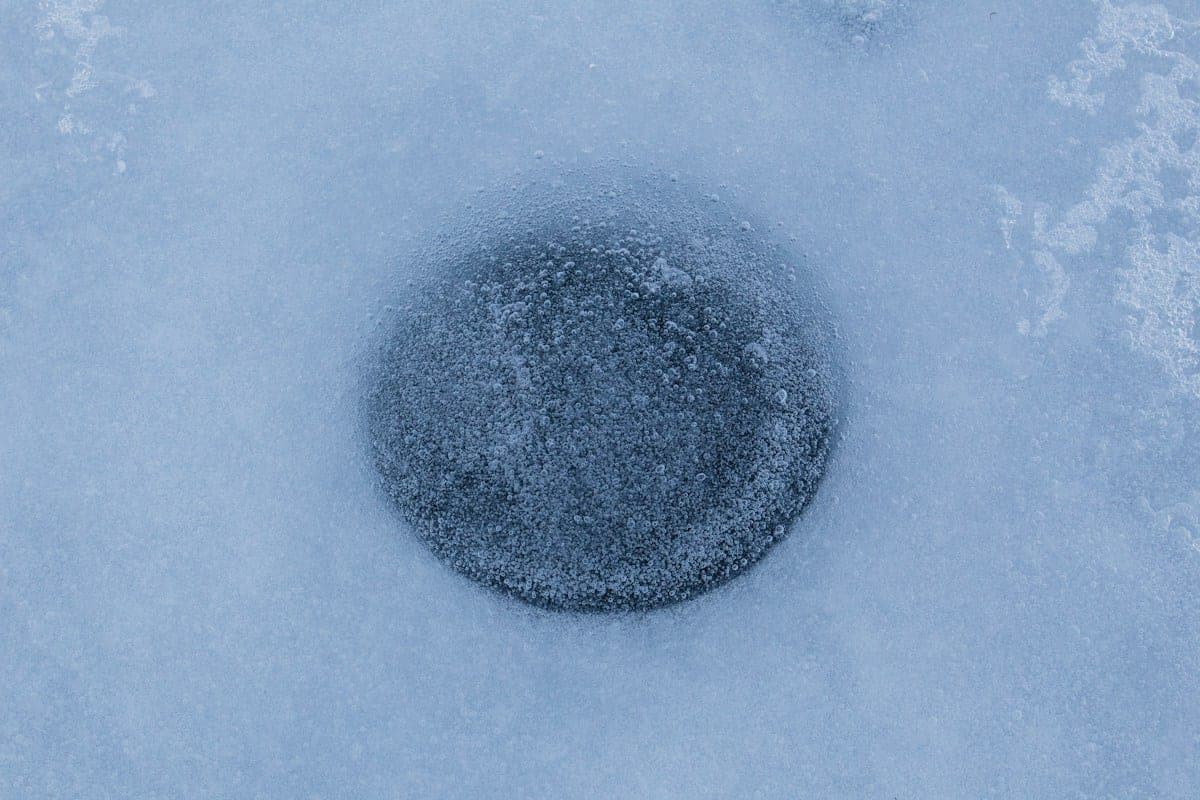
You need an auger to drill through the ice. There are three kinds:
- Hand augers are cheap, light and quiet. They work well on early-season ice and if you only drill a few holes a day. On thick ice they are hard work.
- Electric augers run on rechargeable lithium batteries. They are quiet, light, start every time and need little maintenance. For most people they are the best choice.
- Gas and propane augers have the most power for thick ice and for drilling many holes, but they are heavy, loud and need fuel and maintenance.
Choose the hole size for the fish: 6 inches is fine for panfish and perch, 8 inches suits walleye and most other fish, and 10 inches is safer for big pike and lake trout. Bring an ice scoop to clear slush and new ice from the hole.
Rods, reels and line
Ice rods are short, usually 24 to 36 inches, because you fish straight down and sit close to the hole.
- For panfish and perch, choose a light or ultralight rod with a sensitive tip that shows very light bites.
- For walleye and pike, choose a medium or medium-heavy rod.
A small spinning reel works well. Inline reels, which look like small fly reels, cause less line twist when you fish straight down. A combo is the easiest way to start; you can also buy ice rods and ice reels separately.
Use ice fishing line, which stays supple in the cold and resists freezing. Spool 2 to 4 lb line for panfish and 6 to 8 lb for walleye. Many anglers use braid with a short fluorocarbon leader for walleye and pike.
Lures and tip-ups
Start with three types of ice fishing lure:
- Ice jigs. Tiny jigs, often tungsten so they sink fast, tipped with a waxworm or a few maggots. The first choice for bluegill, crappie and perch.
- Jigging and rattle spoons. Flashy metal spoons that draw fish in from a distance. Tip the treble hook with a minnow head for perch and walleye.
- Darters and jigging raps. Weighted lures that swim in a circle when you lift and drop them. A favorite for walleye and pike.
Tip-ups fish while you jig. A tip-up sits over a hole and holds a live minnow on a line. When a fish takes it, a flag springs up. They are the classic way to catch pike through the ice. Check your local regulations for how many lines you may fish at once.
Staying warm
Cold ends more first trips than slow fishing does. Plan for wind; a frozen lake has no shelter.
- Ice shelters. Hub shelters pop up like a tent and give the most room. Flip-over shelters are built on a sled, so you can move quickly between holes.
- Ice heaters. A small portable propane heater makes a shelter comfortable. Use one designed for indoor use, keep the shelter vented, and carry a carbon monoxide detector.
- Sleds and buckets. A sled carries your gear across the ice; a 5-gallon bucket holds tackle and doubles as a seat.
- Ice suits. A waterproof, insulated jacket and bibs, ideally a suit with built-in flotation, plus insulated waterproof boots and spare gloves.
The optional upgrade: a flasher
An ice fishing flasher is a sonar that shows the bottom, your lure and any fish below the hole in real time. You see a fish rise to your jig and can change what you do to make it bite. It is the single biggest upgrade for catching more fish, but it is not essential for a first season. Start with the basics above, learn your lake, and add a flasher once you know you will keep going.
A first-trip checklist
- Ice picks, cleats, a spud bar and a throw rope.
- An auger and an ice scoop.
- Two ice combos: one light, one medium.
- A small box of ice jigs, spoons and a darter, plus live bait.
- A bucket or sled, warm layers, an ice suit and spare gloves.
Go with someone who has done it before if you can, start on well-used ice close to shore, and enjoy the quietest fishing of the year.