Buying guide · 6 min read
Baitcaster or spinning reel: which to buy first
What each reel does well, where beginners struggle, and the one we would start with.
Updated
First Cast Fishing earns a commission when you buy through links on this site, at no extra cost to you. Affiliate disclosure
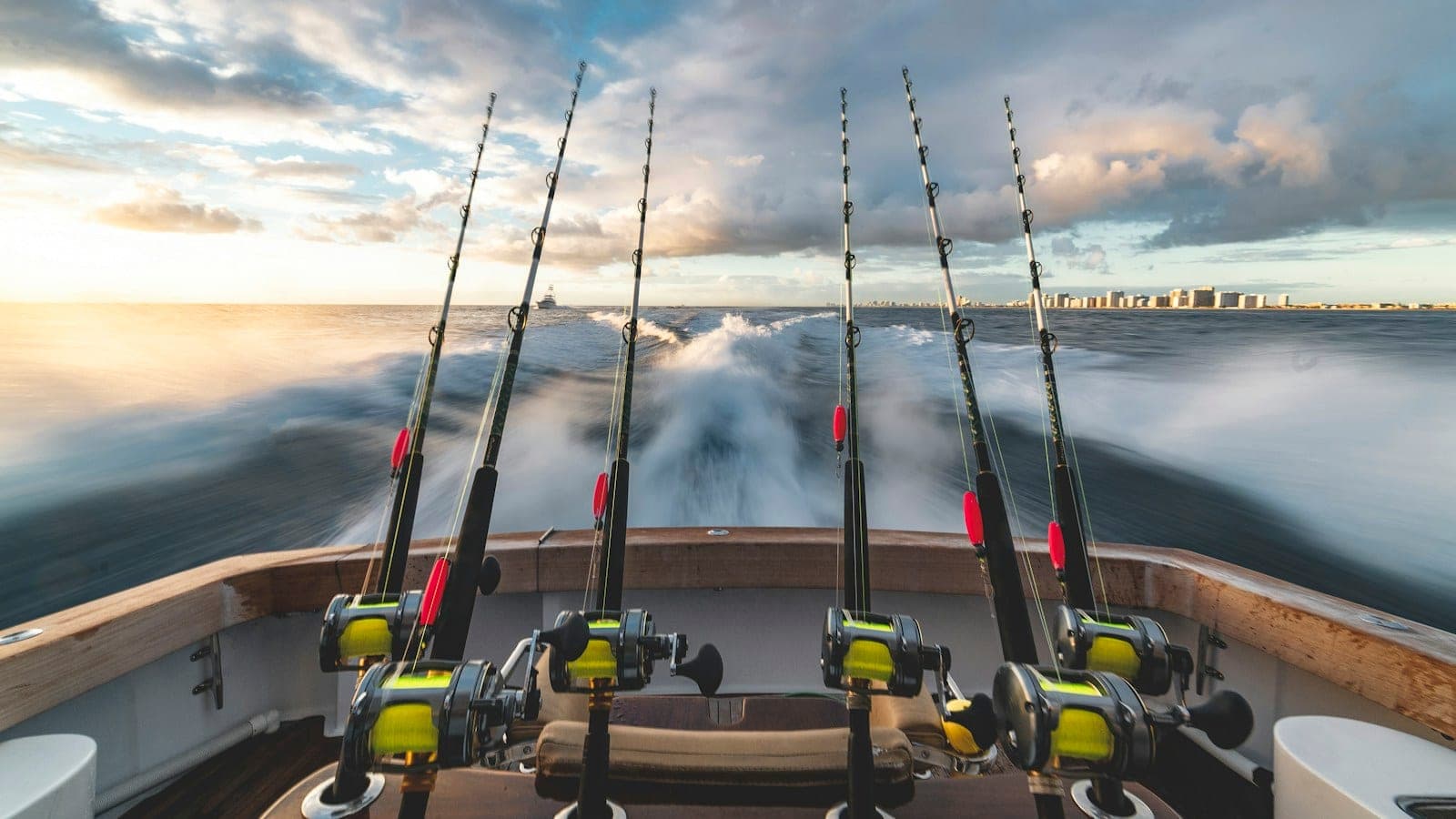
Walk into any tackle shop and you will see two kinds of reel on the wall: spinning reels hanging under their rods, and baitcasting reels sitting on top. Both catch fish, and most serious anglers own both. But they behave very differently, and the wrong one can make your first season frustrating. This guide explains how each reel works, what it does well, and which one to buy first.
How each reel works
A spinning reel has a fixed spool that points along the rod. When you cast, you open the bail (the wire arm) and the line slides off the end of the spool, pulled by the weight of the lure. Nothing spins during the cast, so nothing can tangle. The reel hangs underneath the rod, and you cast with the line held on one finger.
A baitcasting reel has a spool that turns as the line pays out. You press a thumb bar to free the spool, cast, and the spinning spool feeds line to the lure. Your thumb rests on the spool to slow it down and stop it at the end of the cast. The reel sits on top of the rod.
You will see two shapes of baitcaster:
- Low-profile reels are small, palm-sized and the most common choice for bass and general freshwater fishing.
- Round reels are larger and hold more line. They suit heavy line, big lures, catfish, trolling and saltwater.
There is also the spincast reel, the push-button reel with a closed cover. It is the easiest of all to use and a fine choice for young children, but most anglers outgrow it quickly.
What each reel does well
Spinning reels are best for:
- light lures, from about 1/16 oz up to 3/8 oz, which a baitcaster struggles to cast
- light line, from 4 lb to 10 lb, for clear water and finesse fishing
- skipping small baits under docks and casting into the wind without tangles
- learning: you can cast well within an hour
Baitcasting reels are best for:
- heavier lures, from about 3/8 oz up, such as crankbaits, spinnerbaits, jigs and swimbaits
- heavy line and braid for fishing in thick cover, where you need to pull fish out of weeds and wood
- accuracy: your thumb can stop the lure exactly where you want it
- power: the line comes straight off the spool, so you can winch a fish out of cover
Neither reel is better in general. They are tools for different weights of lure and line.
Backlash, brakes and the learning curve
The baitcaster's weakness is the backlash, or bird's nest. If the spool turns faster than the lure pulls line off it, the extra line loops over itself into a tangle. Every baitcaster user has picked one out, and most beginners pick out a lot of them.
Three controls keep the spool in check:
- Spool tension knob. The small knob next to the handle. Tie on your lure, hold the rod out level, press the thumb bar and tighten the knob until the lure falls slowly and the spool stops when the lure hits the ground. Reset it every time you change to a much lighter or heavier lure.
- Brakes. Most reels have magnetic brakes (a dial on the side plate) or centrifugal brakes (small pins inside the side plate). Start with the brakes set high, then turn them down as your thumb gets better.
- Your thumb. Light thumb pressure through the cast, and a firm press as the lure lands, does more than any setting.
With a well-adjusted modern baitcaster, most people can cast cleanly within a few sessions. With a spinning reel, the main problem is line twist, which makes loops jump off the spool. Close the bail by hand rather than by turning the handle, and do not reel while the drag is slipping.
Reading the numbers
Reel size. Spinning reels are sized by a number that grows with the spool. A 1000 or 2000 is for panfish and trout with light line. A 2500 or 3000 is the all-round size for bass, walleye and most freshwater fishing. A 4000 and up suits heavier line, pike and light saltwater. Baitcasters are sized differently by each brand, so compare line capacity instead.
Gear ratio. A 6.4:1 reel turns the spool 6.4 times for each turn of the handle. Low ratios (around 5:1 to 6:1) give more winding power for deep crankbaits. Medium ratios (6:1 to 7:1) are the all-rounders. High ratios (7:1 and up) pick up slack quickly for jigs, worms and topwater frogs. Many brands also list inches per turn, which is the clearer number because it includes the spool size.
Drag. The drag lets line slip before it breaks. The maximum drag on the box is rarely what you use. Set it to about a quarter to a third of your line's breaking strength. A good drag is smooth, without jerks, more than it is strong.
Bearings. More ball bearings is a marketing number. A smooth reel with five good bearings beats a rough reel with twelve.
Matching a rod, and when a combo makes sense
A spinning reel needs a spinning rod, with large guides underneath. A baitcaster needs a casting rod, with small guides on top and a trigger under the handle. The two do not mix.
Every rod is printed with a line rating and a lure weight rating. Match them to the reel and the fishing you plan to do. A 7'0" medium-power, fast-action rod is the most versatile length and power for both types.
For a first outfit, a combo makes sense. The rod and reel are matched for you, and you pay less than for buying them separately. Browse spinning combos and baitcasting combos. Once you know what you like, buy the rod and reel separately and choose each one on its own merits.
Our pick: start with spinning
For most anglers, the first reel should be a spinning reel, size 2500 or 3000, on a 6'6" to 7'0" medium-power rod with 8 to 10 lb line. It casts almost everything a beginner will use, it does not backlash, and it stays useful for light lures long after you add a baitcaster.
Start on a baitcaster instead if:
- you will mostly throw lures heavier than about 3/8 oz, such as crankbaits, spinnerbaits and jigs
- you fish heavy cover, such as weed mats, wood and docks, where you need strong line and a fast hook set
- you fish for catfish, pike or musky, or in saltwater, where heavy line is the norm
- you already fish and are ready to put in a few frustrating sessions to learn
If that is you, choose a low-profile baitcasting reel with magnetic brakes, which are the easiest to adjust, and a gear ratio around 7:1. For big line capacity, look at round baitcasting reels.
Whichever reel you choose, the line on it matters just as much. Read mono, fluoro or braid: picking fishing line before you spool up.