Buying guide · 5 min read
Mono, fluoro or braid: picking fishing line
Stretch, sink rate and visibility decide which line suits a technique, and when to add a leader.
Updated
First Cast Fishing earns a commission when you buy through links on this site, at no extra cost to you. Affiliate disclosure
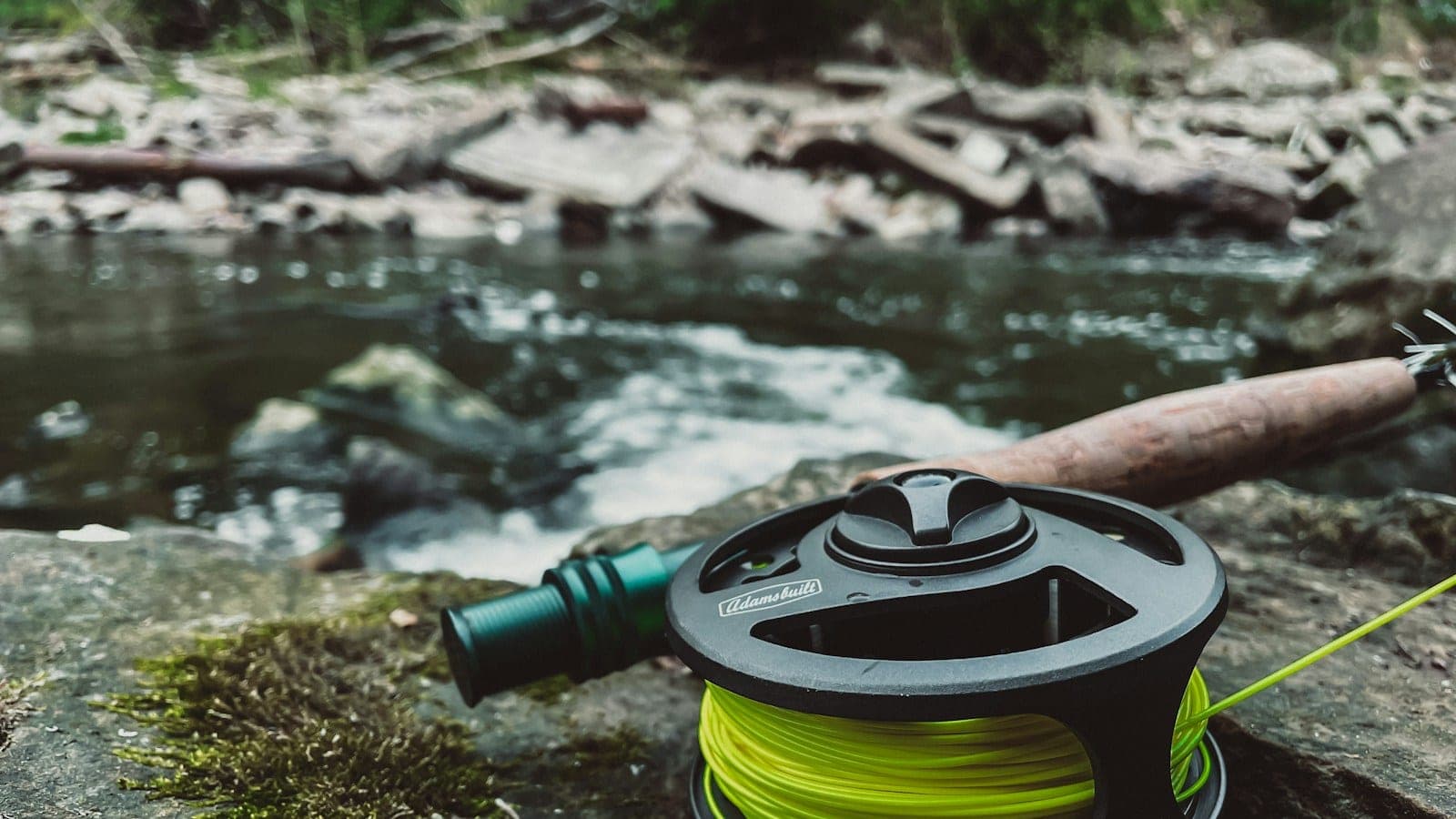
Line is the only thing between you and the fish, and it is the cheapest part of your tackle to get right. Each type of line makes different trade-offs, and the best anglers match the line to the lure and the cover rather than using one spool for everything. This guide compares the four main types, explains braid's odd sizing, and gives a line for each common technique.
The trade-offs
Six properties decide how a line behaves:
- Stretch. A stretchy line absorbs shock and keeps treble hooks from tearing out, but it dulls your feel for bites and softens the hook set at long range.
- Sink rate. A floating line helps topwater lures and keeps slack off the bottom. A sinking line helps diving baits get deeper and keeps finesse baits in contact with the bottom.
- Visibility. In clear water, line-shy fish notice a thick or brightly colored line.
- Abrasion resistance. How well the line survives rubbing on rock, wood, shells and the fish's teeth.
- Memory. Stiff line keeps the coils of the spool, which makes loops, tangles and short casts, especially in cold weather.
- Knot strength. Some lines lose a lot of strength at a badly tied knot. Always wet a knot before you pull it tight.
The four main lines
Monofilament is a single strand of nylon. It stretches the most, sinks slowly and is close to neutral buoyancy, ties easily and costs the least. It is forgiving for beginners and ideal for topwater lures and treble-hook baits. Its weaknesses are stretch at long range, memory, and breakdown in sunlight, so replace it at least once a season.
Fluorocarbon is nearly invisible underwater, because light bends through it almost as it bends through water. It sinks, stretches less than mono and resists abrasion well. It is stiffer and costs more, and it needs careful knots. It is the standard line for bottom-contact baits, cranking and leaders.
Braid is woven from very strong fibers. It has almost no stretch, so you feel every bite and set the hook at long range. It is much thinner than mono of the same strength, floats, cuts through weeds and lasts for years. It is also highly visible, can slip on a bare spool, and makes wind knots on spinning reels if you let slack build.
Copolymer is nylon made from two or more polymers. It sits between mono and fluorocarbon: less stretch and better abrasion resistance than mono, softer and cheaper than fluoro, and it sinks slowly.
| Line | Stretch | Floats or sinks | Visibility | Abrasion | Memory | Best for |
|---|---|---|---|---|---|---|
| Monofilament | High | Sinks slowly | Medium | Medium | High | Topwater, treble hooks, beginners |
| Fluorocarbon | Low to medium | Sinks | Low | High | Medium to high | Bottom baits, cranking, leaders |
| Braid | Almost none | Floats | High | Medium | None | Heavy cover, frogs, long casts, main line with a leader |
| Copolymer | Medium | Sinks slowly | Medium | Medium to high | Medium | All-round line between mono and fluoro |
Braid diameter versus pound test
Braid is labeled by breaking strength, but it is far thinner than mono of the same strength. The comparison below is approximate, and brands vary, so check the diameter on the spool.
| Braid | Roughly the diameter of mono |
|---|---|
| 10 lb | 2–4 lb |
| 20 lb | 6 lb |
| 30 lb | 8 lb |
| 50 lb | 12 lb |
| 65 lb | 16 lb |
That is why 30 lb braid is a common choice on a spinning reel: it is thin enough to cast well and far stronger than you need. In heavy cover, anglers use 50 to 65 lb braid because the extra strength pulls fish out of weeds, not because the fish are that big.
Leaders: when to run fluoro to braid
A leader is a short length of a different line tied to the end of the main line. The most common pairing is a braid main line with a fluorocarbon leader. You keep braid's casting distance, strength and feel, and the fish sees only the clear fluorocarbon near the lure.
Use a leader when:
- you fish braid in clear water
- the fish or the cover would cut braid, such as rock, shell or a pike's teeth
- you want a little stretch near the hook
Most anglers use 4 to 8 feet of leader on a spinning reel. A double uni knot is the easiest to tie; the FG knot is slimmer and slides through the guides better once you learn it. Typical leaders are 6 to 10 lb leader material for finesse fishing and 12 to 20 lb for jigs and heavier baits.
Line by technique
- Topwater lures: mono, because it sinks slowly enough not to drag the lure under and its stretch keeps treble hooks pinned. For hollow-body frogs in weed mats, 50 to 65 lb braid.
- Crankbaits: 10 to 15 lb fluorocarbon to help the bait dive, or mono for shallow baits. See how to choose a crankbait by depth.
- Finesse rigs: 10 to 15 lb braid on a spinning reel with a 6 to 8 lb fluorocarbon leader. See rigging soft-plastic worms.
- Jigs and Texas rigs: 15 to 20 lb fluorocarbon in open water, 50 to 65 lb braid in heavy cover.
- General fishing with a spinning combo: 8 to 10 lb mono or copolymer is hard to beat.
Spooling tips
- Fill to the right level. Leave about 1/8 inch below the lip of a spinning spool. Overfilling makes loops jump off; underfilling cuts casting distance.
- Keep tension on the line. Run it through a cloth or a line spooler so it goes on tight.
- Match the coil direction on spinning reels. Lay the supply spool flat so the line comes off it in the same direction the bail turns. If the line twists as you wind, flip the supply spool over.
- Back braid with mono. A few turns of mono under braid, or a strip of electrical tape on the spool, stops the braid slipping when you set the hook.
- Replace it on time. Re-spool mono and fluorocarbon at least once a season, or sooner if the line looks chalky or kinks. With braid, you can reverse it on the spool to use the fresh end.
Specialist lines
A few lines are made for one job: fly line and backing and fly leaders and tippet for fly fishing, ice fishing line that stays supple in the cold, and lead core and wire trolling line for getting baits deep behind a boat. If you are just starting, any of the four main lines above will catch fish. Choose by the lures you throw most.