How-to · 5 min read
Matching lure color to water clarity
A simple rule for clear, stained and muddy water, plus the five colors to carry first.
Updated
First Cast Fishing earns a commission when you buy through links on this site, at no extra cost to you. Affiliate disclosure
Lure color starts more arguments than almost anything else in fishing. Some anglers swear by one color; others say fish barely notice. The truth sits in between. Color matters most when fish can see the lure clearly, and matters least when they find it by feel. Read the water and the light, and you can pick a sensible color in seconds.
Reading water clarity
Most water falls into one of three groups:
- Clear: you can see a light-colored lure, or the bottom, 6 feet down or more. Common in deep, rocky lakes, spring-fed rivers and cold water.
- Stained: the water has a green or tea color, and a lure disappears between about 2 and 6 feet. This is the most common condition in lakes and reservoirs, especially in summer.
- Muddy: you lose sight of the lure within 2 feet. Expect it after heavy rain, in rivers, and in shallow lakes on windy days.
A quick visibility test: tie on a white or chrome lure, lower it beside the boat or off the bank, and note the depth where it disappears. Under 2 feet is muddy, 2 to 6 feet is stained, and more is clear. Check again during the day, because wind and rain change clarity quickly.
Light and depth
Light changes how colors look underwater.
- Bright sun puts a lot of light in the water. Fish get a clear look at the lure, so natural colors and translucent baits look most real.
- Overcast skies, dawn and dusk give less light. Solid colors and darker baits show a clearer outline.
- Depth filters color. Red is the first color to fade with depth, then orange and yellow. By about 15 to 20 feet, many colors look like shades of gray and green. What still shows is contrast: a dark bait against a light background, or a flash of light off a metallic finish.
Natural or contrast?
There are two broad approaches:
- Natural colors copy what fish eat: shad, perch, bluegill and crawfish. Think silver and white shad patterns, green pumpkin, watermelon and brown. Use them when fish can see well and inspect the lure: clear water and bright light.
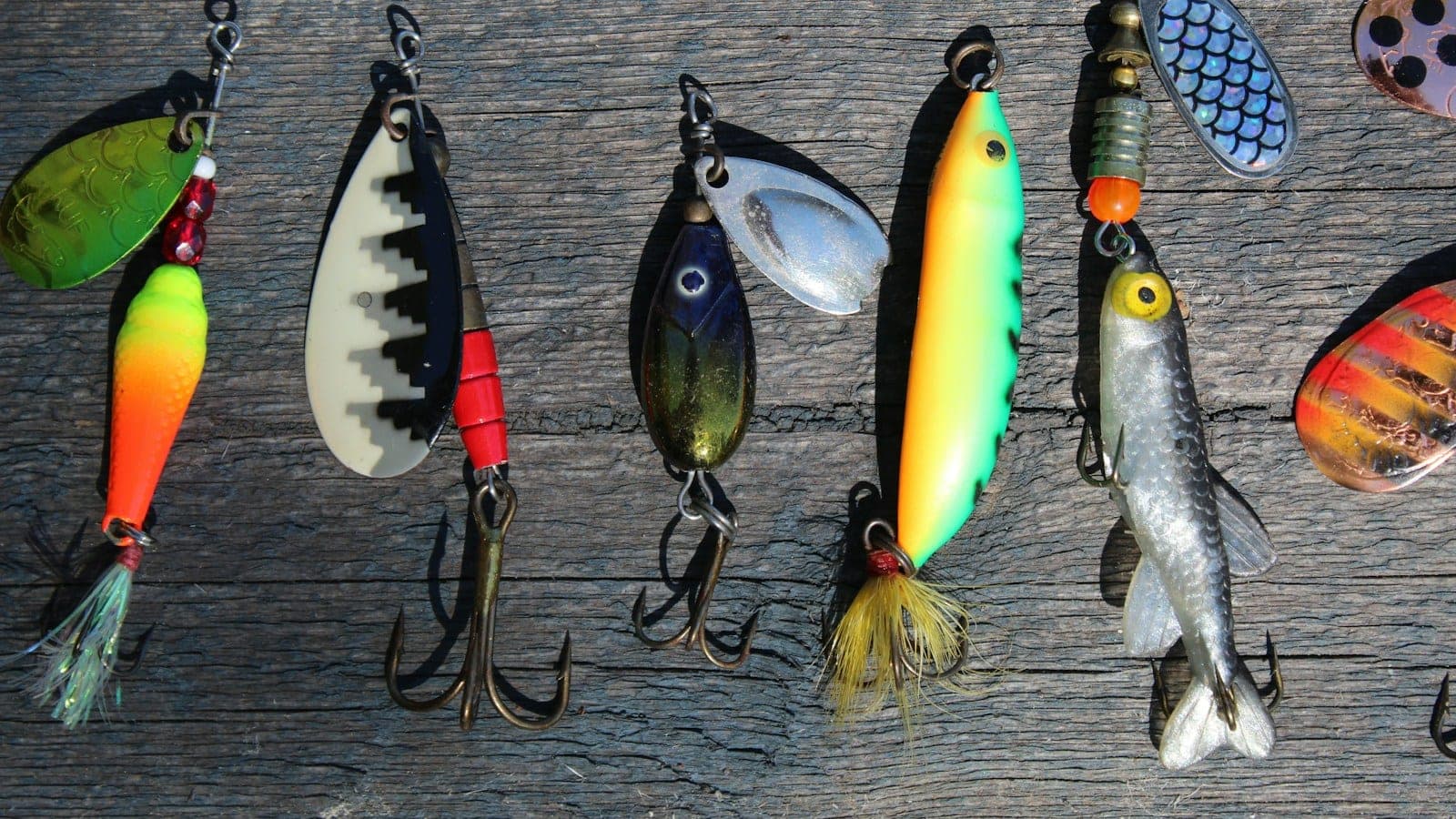
- Contrast colors stand out: chartreuse, white, firetiger, black and blue. Use them when fish need help to find the lure: stained or muddy water and low light.
Black is often the best color in the dirtiest water. It makes the strongest silhouette against the lighter surface above.
When vibration and profile beat color
In muddy water, fish rely on their lateral line, the row of sensors along each side of the body that feels movement in the water. A lure's vibration and size then matter more than its color.
- Choose crankbaits with rattles and a wide wobble.
- Choose spinnerbaits with Colorado blades, which thump harder than slim willow-leaf blades.
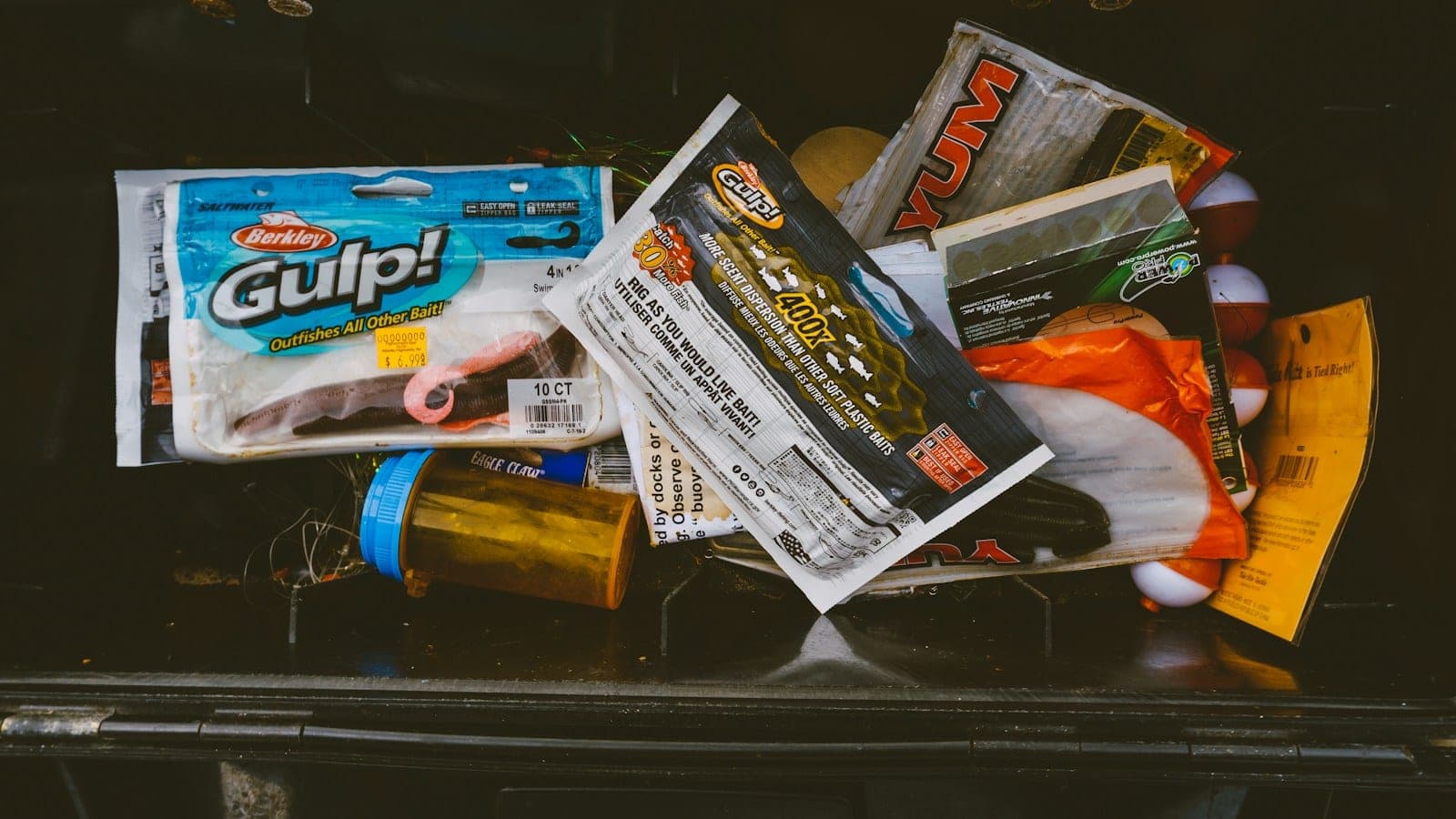
- Choose bulkier soft plastics with curly or paddle tails, and slow down so fish have time to find them.
In very clear water, the opposite applies: smaller baits, subtle actions and natural, translucent colors.
The rule of thumb
Start with this table, then let the fish tell you if they want something else.
| Water | Bright light | Low light (cloudy, dawn, dusk) |
|---|---|---|
| Clear | Natural and translucent: ghost shad, watermelon, green pumpkin | Natural with flash: silver shad, white, smoke with glitter |
| Stained | Natural with a bright accent: green pumpkin with chartreuse, gold or copper metallics | Bright and solid: chartreuse and white, firetiger, white |
| Muddy | Dark or very bright: black and blue, solid chartreuse | Dark: black and blue, black and red |
The pattern is simple. The clearer the water and the brighter the light, the more natural the color. The dirtier the water and the dimmer the light, the brighter or darker the color.
A five-color starter set
You do not need every color. These five cover almost any water:
- Shad (silver and white). Crankbaits, spinnerbaits and swimbaits for clear and lightly stained water, wherever baitfish are the main food.
- Chartreuse and white, or firetiger. The same baits for stained water and cloudy days.
- Green pumpkin. Soft-plastic worms, jigs and creature baits. It looks like a crawfish or a goby in almost any clarity.
- Black and blue. Worms, jigs and spinnerbaits for muddy water, night fishing and heavy cover.
- Red crawfish. Crankbaits and lipless baits in early spring, when crawfish turn red and become active.
Buy each lure you fish most in two or three of these colors before you add specialist patterns.
Putting it together
On the water, work through it in order:
- Choose the lure for the depth and the cover. A color cannot fix a bait that runs at the wrong depth. See how to choose a crankbait by depth.
- Check the clarity and the light, and choose a color family from the table.
- Change one thing at a time. If the fish do not respond, try the opposite family (natural for bright, or bright for natural) before you change lures.
- Watch what the fish eat. If you see baitfish chased to the surface, match their size and color. If you catch a fish that spits up crawfish, switch to a crawfish color.
Common mistakes
- Changing color before changing depth or speed. If fish are not biting, the lure is more often at the wrong depth or moving at the wrong speed than in the wrong color.
- Fishing bright colors in very clear water on a sunny day. Fish get a long look and turn away. Go natural, smaller and lighter on the line.
- Ignoring the bottom. Over dark mud or weeds, a light-colored lure stands out; over pale sand, a darker lure does.
- Owning too many colors. A box with three colors of the right lures catches more fish than a box with thirty colors of the wrong ones.
For soft-plastic rigs to go with those colors, read rigging soft-plastic worms: Texas, wacky and Ned.