Technique · 5 min read
Rigging soft-plastic worms: Texas, wacky and Ned
Three rigs, the hooks and weights each one needs, and when to tie which.
Updated
First Cast Fishing earns a commission when you buy through links on this site, at no extra cost to you. Affiliate disclosure
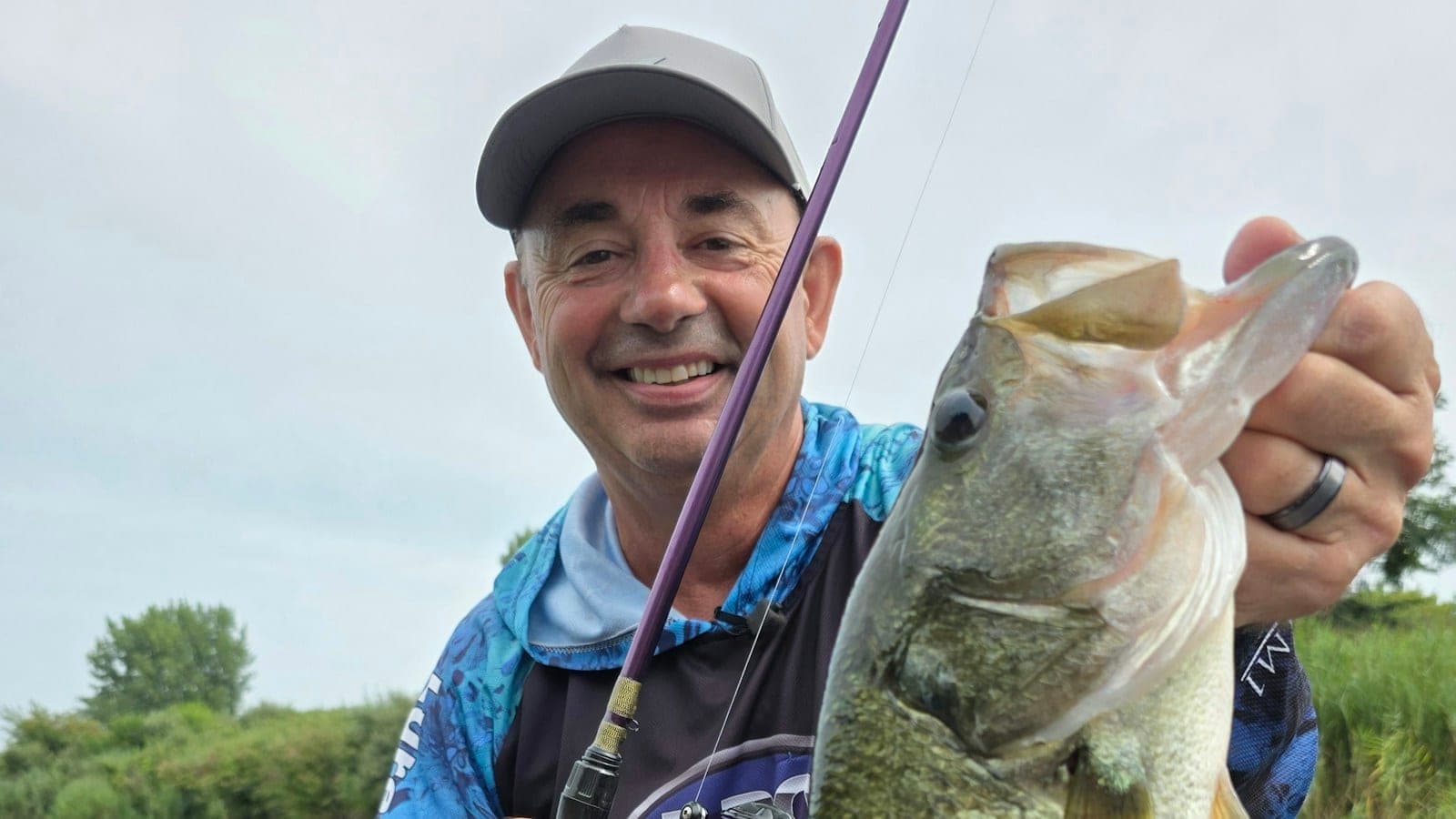
A soft-plastic worm catches fish in every season and almost every kind of water, but only if it is rigged for the job. The same worm can slide through heavy weeds on one rig and shimmy slowly to the bottom on another. This guide covers the three rigs most anglers learn first: the Texas rig, the wacky rig (with its cousin, the neko) and the Ned rig. For each one you will find the hook, the weight, how to tie it and when to use it.
The Texas rig
The Texas rig is the classic weedless worm rig. The hook point is buried in the plastic, so it slides through weeds, wood and rock without snagging.
What you need:
- A worm hook, either an extra-wide-gap (EWG) or an offset shank hook. Size 3/0 suits most 6- to 7-inch worms; go to 4/0 or 5/0 for thicker baits.
- A bullet weight, pointed end toward the rod. Use 1/8 to 3/16 oz in shallow water, 1/4 to 3/8 oz in deeper water or wind, and 1 oz or more to punch through thick weed mats.
- A straight-tail or ribbon-tail worm.
How to rig it:
- Slide the bullet weight onto the line, then tie on the hook.
- Push the hook point about a quarter of an inch into the center of the worm's head, then out through the side.
- Pull the hook through until the eye sits against the head and the worm covers the offset bend.
- Turn the hook so the point faces the worm's body. Lay the hook alongside the worm to see where the point meets it.
- Push the point into the worm's body at that spot and bring it up so it sits just under the skin on the far side, without coming out. This is called skin-hooking.
The worm should hang straight. A bent worm spins in the water and twists your line.
Pegging the weight: a loose bullet weight slides away from the worm, which lets the worm fall naturally in open water. In heavy cover, a loose weight can slide over a branch while the worm hangs on the other side. Peg it in place with a rubber bobber stop on the line above the weight, or a toothpick wedged into the weight and snapped off.
Fishing it: cast, let it sink to the bottom on a slack line, then lift the rod tip slowly and let the worm fall back. Most bites come on the fall. If the line jumps or swims sideways, reel up the slack and set the hook hard.
The wacky rig and the neko rig
The wacky rig is the simplest rig of all and one of the most effective. The hook goes through the middle of a stick bait, so both ends hang free. As it sinks, the ends flutter and shimmy, and fish often take it before it reaches the bottom.
What you need:
- A wacky hook, size 1 to 2/0. Many have a small wire weed guard for fishing around cover.
- A rubber O-ring. Slide it onto the middle of the worm and hook under the ring rather than through the plastic. The worm lasts far longer.
- A 5-inch stick bait.
Fishing it: cast near docks, laydowns, weed edges or spawning areas, and let it sink on a slack line. Watch the line, not the rod. When the worm reaches the bottom, twitch it up once or twice and let it fall again.
The neko rig is a wacky rig with a weight in one end. Push a nail weight (1/32 to 1/8 oz) into the head of the stick bait, then hook the bait about a third of the way down from the head. The weighted head sinks to the bottom and the tail stands up and quivers. Use a neko rig when fish are deeper than a plain wacky rig reaches quickly, or when they want a bait that stays near the bottom.
The Ned rig
The Ned rig is a small, buoyant plastic on a light mushroom-shaped jig head. It looks like very little, but it catches fish when nothing else does, especially smallmouth bass in clear water and fish under heavy fishing pressure.
What you need:
- A Ned head, 1/16 to 1/5 oz. Most anglers start with 1/10 oz.
- A Ned bait, a short stick bait about 2.75 to 3 inches long. Many are made from a floating material, so the tail stands up off the bottom when the head rests.
How to rig it: push the hook point into the center of the flat end of the bait, thread it on until the bait sits snugly against the head, and bring the point out on top. The bait should be straight.
Fishing it: cast, let it sink, then drag it slowly or hop it gently along the bottom with small lifts of the rod tip. Pause often; many bites come while the bait is still. Slow is almost always better.
Which rig when
| Rig | Cover | Depth | Fish mood |
|---|---|---|---|
| Texas rig | Heavy: weeds, wood, rock | Any; heavier weights for deep water or mats | Active to neutral |
| Wacky rig | Light: docks, weed edges, open banks | 0–10 ft | Neutral to cautious; spawning fish |
| Neko rig | Light to moderate | 5–25 ft | Cautious; fish near the bottom |
| Ned rig | Open bottom, rock, gravel | 2–20 ft | Cautious; cold water, clear water, heavy fishing pressure |
When in doubt, start with a Texas rig around cover. If the fish ignore it, switch to a wacky or neko rig. If the water is cold and clear or the fish are tight-lipped, tie on a Ned rig.
Rod and line for each rig
- Texas rig: a 7'0" to 7'3" medium-heavy, fast-action casting rod with 12 to 17 lb fluorocarbon. For punching weed mats, use a heavy rod and 50 to 65 lb braid.
- Wacky rig: a 7'0" medium spinning rod with 10 to 15 lb braid and a 6 to 10 lb fluorocarbon leader.
- Neko rig: the same as the wacky rig, or a slightly stiffer medium spinning rod for deeper water.
- Ned rig: a 6'10" to 7'0" medium-light spinning rod with 10 lb braid and a 6 to 8 lb fluorocarbon leader.
Not sure which line to buy? Read mono, fluoro or braid: picking fishing line. For colors, green pumpkin and watermelon are the starting points in clear water, and black and blue in stained or muddy water; see matching lure color to water clarity. Then browse finesse worms and the rest of the soft-plastic worms.