Buying guide · 6 min read
Choosing an ice shelter: pop-up hub, insulated or flip-over
Hub, flip-over or insulated. How to size an ice shelter, set it up, anchor it against the wind and kit it out.
Updated
First Cast Fishing earns a commission when you buy through links on this site, at no extra cost to you. Affiliate disclosure
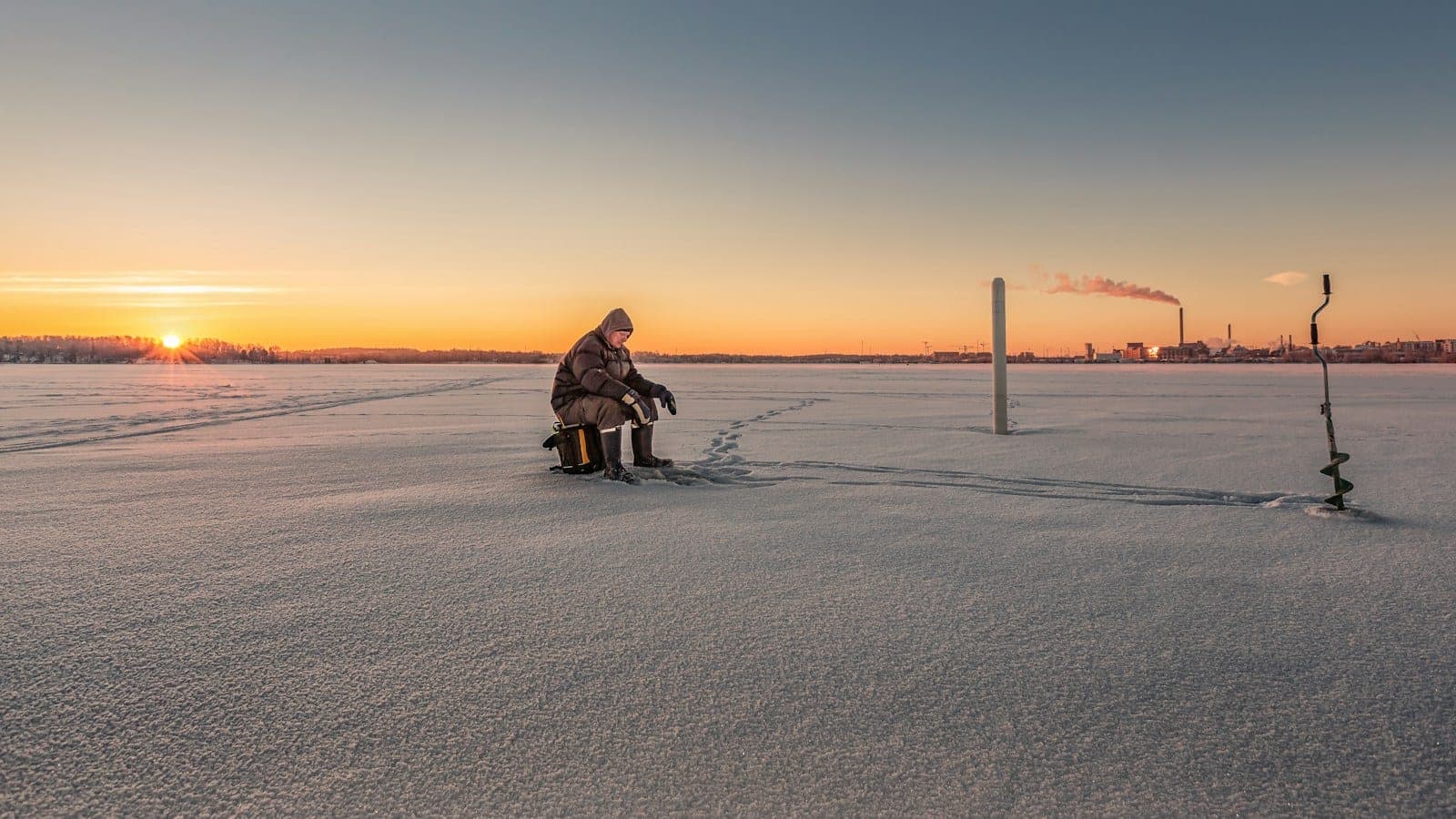
A shelter turns a cold, windy day on the ice into a comfortable one. It blocks the wind, holds the heat from a small heater, and darkens the space around your hole so you can see down into the water. There are three main kinds: pop-up hubs, flip-overs and insulated (thermal) versions of both. This guide explains how each one works, how to size a shelter for the number of anglers, how to set it up and anchor it, and which accessories are worth adding.
Hub, flip-over or insulated
| Type | Setup | Weight | Suits | Drawbacks |
|---|---|---|---|---|
| Hub (non-insulated) | 1–3 minutes | 15–35 lb | Groups, fishing one spot, carrying on foot | Colder; catches wind; slower to move |
| Hub (insulated) | 1–3 minutes | 30–60 lb | Long days in deep cold | Bulkier to pack and carry |
| Flip-over | Under a minute | 40–120 lb | One or two anglers moving often | Heavy; less floor space per pound |
Weights are typical ranges and vary with size and fabric.
Pop-up hub shelters
A hub shelter is a large tent with spring-loaded hubs at the center of each wall. You stand it up, pull each hub outward until it pops into shape, and the walls go tight. They fold down into a carry bag, give the most floor space for the weight, and let a group fish together with room for a heater and a bucket each.
The downside is mobility. Moving a hub means pulling the anchors, collapsing or dragging the shelter, and setting it up again. Hubs suit days when you have found fish and plan to stay.
Sizes run from small two-person hubs to large six-sided shelters for eight or more. The ThunderBay Ice Cube is a small hub sized for two or three anglers, which leaves real elbow room for two. The Eskimo FatFish 949i is a larger hub with 61 square feet of floor space for three or four anglers.
Flip-over shelters
A flip-over is built on a plastic sled, usually with a seat inside. You sit down, pull the fabric up and over you on its poles, and you are fishing in seconds. When the fish move, you flip the top back, pack the auger and rod into the sled and tow it to the next hole.
Flip-overs suit anglers who drill a lot of holes and move often to find fish, especially for perch, walleye and panfish. They are heavy, and most fit one or two anglers. Many are towed behind a snowmobile or ATV, though one-person flip-overs can be pulled by hand. Browse flip-overs and hubs together in ice shelters.
Insulated (thermal) shelters
Insulated shelters, often sold as "thermal," use a quilted fabric with a layer of insulation inside. Both hubs and flip-overs come in insulated versions. They hold heat far better, so a small heater keeps them warm on low, and they collect less frost on the inside walls. The trade-off is weight and bulk: an insulated hub often weighs a third to a half more than a non-insulated one of the same size and packs into a bigger bag.
The Clam X600 Thermal is an insulated six-sided hub, a size for a group that plans to stay in one spot all day.
If you fish mostly in early or late season, or on mild days, a non-insulated hub may be all you need. If you fish through January and February in the north, or with children, insulation makes the biggest difference to comfort.
Sizing: square feet and anglers
Makers list a shelter's capacity in anglers, but those numbers assume everyone sits shoulder to shoulder. A more comfortable rule of thumb is about 20 square feet per angler, plus room for a heater.
- One angler: a one-person flip-over or a small hub of 30 to 40 square feet.
- Two anglers: 40 to 60 square feet.
- Three or four anglers: 60 to 90 square feet.
- Five or more, or families with gear: 90 square feet and up, usually a six-sided hub.
Check the center height too. If you want to stand up inside, look for 6 feet 6 inches or more at the peak. Count the doors and windows: two doors make it easier to come and go without climbing over someone's rod.
Fabric weight is listed in denier (D). 300D is light and packs small; 600D and heavier resists tears and wind abrasion better but weighs more.
Setting up a hub
- Drill your holes first, before the shelter goes over them.
- Lay the shelter on the ice with the door facing away from the wind.
- Anchor the upwind side before you pop the hubs. A hub catches wind like a sail.
- Pop each hub out from the inside or outside, one wall at a time.
- Anchor the remaining corners and add tie-down ropes if it is windy.
- Bank snow around the skirt to block drafts.
- Open the vents, especially if you will run a heater.
Anchoring against the wind
A loose hub can blow across a lake in seconds. Anchor every corner, every time.
Ice anchors are steel screws with an eye at the top. Most can be turned in by hand with a handle, but a cordless drill and an anchor drill adapter turns each one in a few seconds. The ThunderBay ice anchor kit is a nine-piece set of self-tapping anchors for a shelter's corners. A drill adapter fits the eye of the anchor to a drill's chuck, so you can set and remove anchors quickly with the same drill you might use for a drill auger.
On very windy days, add tie-down ropes from the hub's upper loops to extra anchors, angled out like the guy lines on a tent. Set anchors in clean ice, not slush, and check them again if the temperature climbs and the ice softens.
Accessories that help
- Rod holders. Clip-on or screw-in holders keep a deadstick rod off the ice and at the right height to watch the tip. Many fit a hub's frame or a flip-over's tub.
- Coat hooks. Small hooks that clip to a hub's wall or frame to hang gloves, hats and a scoop off the floor.
- Runners. Plastic strips that bolt to the bottom of a flip-over's sled to protect it from wear and help it glide.
- A travel cover. Protects a flip-over's fabric when you tow it at speed.
- A sled. Hubs fold into a bag, but a sled makes carrying the shelter, auger and bucket in one trip far easier.
Rod holders, coat hooks, runners and travel covers sit with the shelters in ice shelters.
Heat and ventilation
Use a heater designed for indoor use, keep the shelter's vents open, and bring a battery carbon monoxide detector. Keep the heater away from the walls and never run a gas auger inside. An insulated shelter needs less heat, but it still needs fresh air.
Which shelter to choose
- You fish alone or with one friend and move a lot: a one or two-person flip-over.
- You walk out, fish one spot and want room: a non-insulated hub of 40 to 90 square feet.
- You fish deep winter, with a group or with children: an insulated hub.
- You fish from a snowmobile or ATV and chase fish all day: an insulated flip-over.
Whatever you choose, think about what you can pull as well as the floor space. The shelter, auger, bucket and heater all go on the same sled.
For the rest of the kit you need on the ice, see your first ice fishing kit.