Buying guide · 7 min read
How to choose an ice auger: hand, gas or electric
Hand, gas, propane, electric or a drill bit. Match the power, blade size and weight to the ice you fish and the holes you drill.
Updated
First Cast Fishing earns a commission when you buy through links on this site, at no extra cost to you. Affiliate disclosure
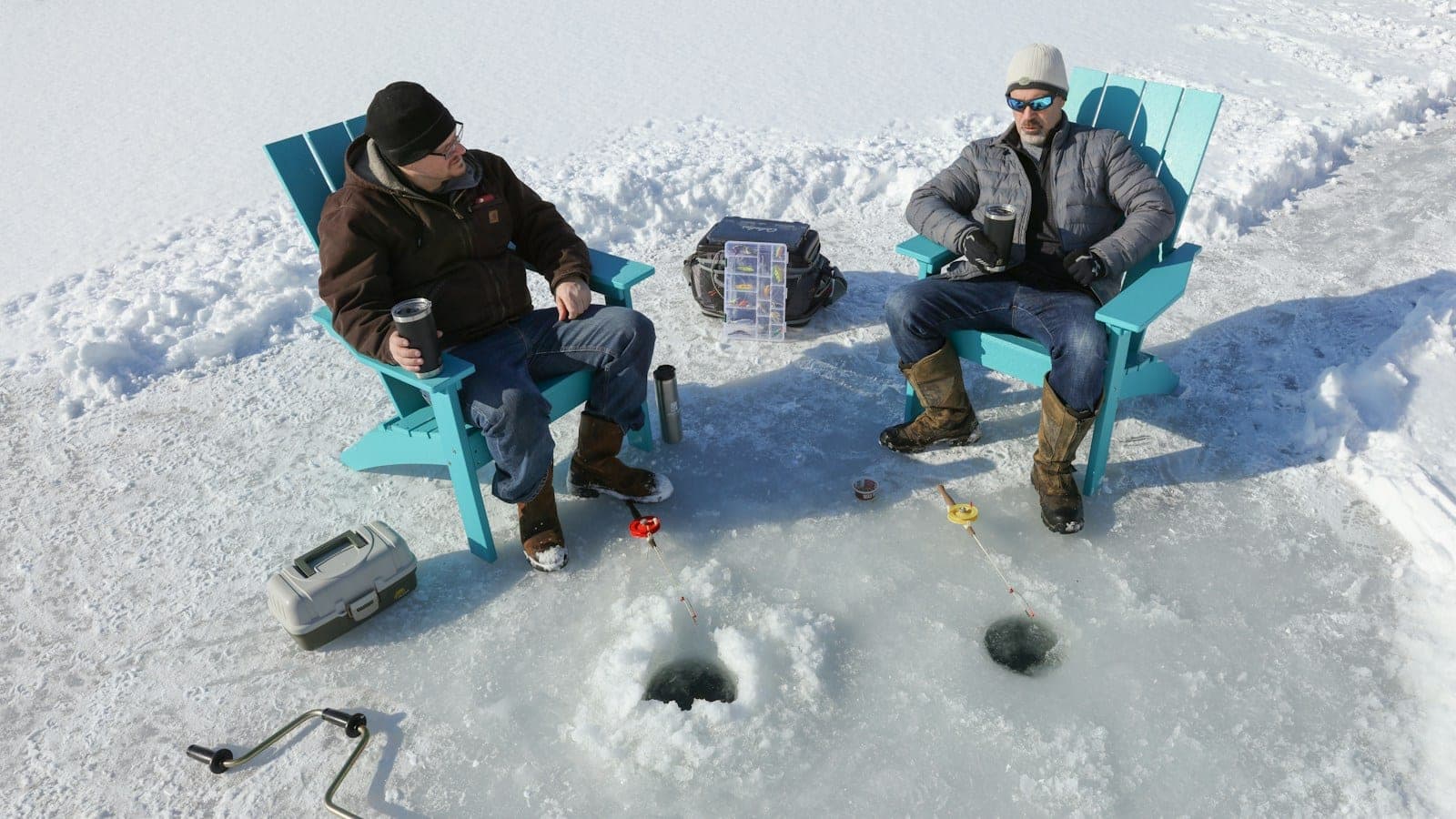
Almost every ice trip starts with an auger, and it is often the heaviest thing you carry onto the lake. Choosing one comes down to four questions: how you will power it, how wide a hole you need, how much weight you are willing to pull across the ice, and what kind of blade will keep cutting. This guide works through each, then covers blades, extensions and the chisel you should carry to check the ice before you drill.
The five ways to drill a hole
| Type | Typical weight (8 in) | Strengths | Drawbacks | Browse |
|---|---|---|---|---|
| Hand | 6–10 lb | Light, quiet, nothing to start or charge | Slow and tiring past about 12 in of ice | Hand augers |
| Drill-driven | 6–10 lb plus the drill | Light, uses a drill you may own | Needs a high-torque drill and spare batteries | Ice augers |
| Electric | 20–30 lb | Quiet, starts instantly, little upkeep | Battery runs down faster in deep cold | Electric augers |
| Gas | 25–35 lb | Most power for thick ice and many holes | Loud, fumes, fuel mixing, engine upkeep | Gas and propane augers |
| Propane | 25–35 lb | Engine power without mixing fuel | Canisters to carry, still loud | Gas and propane augers |
Weights vary by brand, battery and blade size; a 10-inch power auger usually weighs a few pounds more than the same model in 8 inches.
Hand augers
A hand auger is a steel shaft with a crank handle and a cutting head. You lean on it and turn. On early-season ice of 6 to 10 inches, a sharp 6-inch hand auger cuts a hole in well under a minute. On 20 inches of late-winter ice it is real work, and drilling a dozen 8-inch holes becomes the main exercise of the day.
Hand augers make sense if you fish early ice, fish for panfish in a few holes, walk long distances, or want a backup that always works. The Strike Master Mora hand auger is an 8-inch auger with curved Mora-style blades and a two-piece shaft that breaks down to fit in a sled or a car trunk.
Drill-driven augers
A drill auger is an auger bit with no handle or motor. It locks into a cordless drill through a drill adapter, a short hex or round shaft that fits the drill's chuck. Some bits come with a universal adapter, such as this 8-inch auger bit; others need a separate drill adapter.
The setup is light and quick, but the drill matters. You need an 18 or 20 volt brushless drill with a 1/2-inch chuck, high torque and a side handle. A small driver drill will stall, and a big drill that binds in the ice can twist hard enough to hurt a wrist. Use the side handle, set the drill to drill mode rather than a clutch setting, follow the bit maker's advice on which speed to run, and carry at least two charged batteries in an inside pocket where they stay warm.
Electric augers
Purpose-built electric augers run on large lithium batteries, most often 40 volts, with a few lighter 24-volt models for small holes. They start with a trigger, make little noise, have no fuel or spark plugs and weigh less than most gas models. For most anglers who drill more than a handful of holes, they are the easiest choice.
The Eskimo E40 is a 40-volt electric auger with an 8-inch steel bit, a size that suits walleye and most other fish. How many holes you get per charge depends on the ice thickness, the blade sharpness and the cold; expect fewer holes on a subzero day, and keep a spare battery warm if you drill a lot.
Gas and propane augers
Gas augers have small two-stroke or four-stroke engines, and they still have the most power for thick ice and long days of hole-hopping. The Eskimo Quantum is a 33cc gas auger with an 8-inch blade. Two-stroke engines need oil mixed into the fuel; four-stroke and propane engines do not. Propane augers run on the same 16 oz canisters many heaters use.
Engines need regular care: fresh fuel, a clean spark plug, and the fuel drained or stabilized before summer storage. They are loud and give off exhaust, so never run one inside a shelter.
Blade diameter: 6, 8 or 10 inches
A wider hole fits bigger fish, but it takes more effort and more battery or fuel. The area of the hole grows faster than the diameter: an 8-inch hole removes about 78% more ice than a 6-inch hole, and a 10-inch hole about 56% more than an 8-inch one.
- 6 inch: bluegill, crappie, perch and stocked trout. Fast to drill and light to carry. A big walleye can still fit, but landing one is harder.
- 8 inch: the all-round size. Walleye, most trout, bass and small to medium pike.
- 10 inch: big pike, lake trout and anywhere a large fish is a real chance. Many pike anglers drill 10-inch holes for tip-ups and 8-inch holes for jigging.
If you fish for everything and can own only one auger, choose 8 inches. Pike anglers who set tip-ups for big fish often want a 10.
Hole count matters too. If you drill five holes and sit, a hand auger or drill auger works. If you drill 20 or 30 holes to find fish, choose a power auger.
Weight and getting it on the ice
Weight is easy to ignore in the store and hard to ignore after a half-mile walk in snow. A hand or drill auger can ride on your shoulder. A 30 lb power auger is easier in a sled with the rest of your gear.
Check the cutting length as well. Most augers cut through roughly 36 to 48 inches of ice, more than enough in most places. Where ice gets very thick, an extension adds about 12 inches. Some augers have adjustable handles that let you set the height to suit you.
Blade types and replacement blades
The cutting head does the work, and a dull blade turns any auger into a slow one.
- Mora-style curved blades are common on hand augers. They shave clean ice quickly and can be sharpened, but they dull fast if they hit sand or gravel.
- Straight or flat blades cut fast and smoothly in clean ice and are common on power augers and some hand augers.
- Chipper blades have a scalloped edge that chips rather than shaves. They are slower in clean ice but handle dirty ice and redrilling old holes better.
Blades are made for a specific auger and diameter, so match the brand, model and size when you buy replacements. A spare set (you will find them under ice augers) lets you swap a dull or chipped blade on the ice.
To keep blades sharp:
- Put the blade guard on every time you lift the auger out of a hole.
- Stop drilling the moment the blade breaks through, and never let it touch the bottom in shallow water.
- Dry the blades after each trip so they do not rust.
- Replace or professionally sharpen them when the auger starts to "walk" or chatter instead of biting.
A chisel for checking the ice
An auger tells you the thickness only where you drill. A spud or ice chisel lets you test the ice ahead of you as you walk. Strike it hard in front of you every few steps; a common rule of thumb is that if it goes through in one or two blows, you turn back. A chisel also opens a frozen-over hole quickly and can cut a hole in early ice with no auger at all.
The Eskimo CH11 ice chisel is a 59.5-inch chisel with a triple-action chipper head, long enough to test ice without bending over. Tie a cord from the handle to your wrist so a hard strike does not send it through the hole.
Ice thickness varies across every lake, and a chisel is no substitute for checking local conditions and carrying ice picks. Read the safety section of your first ice fishing kit before your first trip.
Which auger to buy
- Early ice, panfish, a few holes, long walks: a 6-inch hand auger.
- You already own a strong 18 to 20 volt drill: a 6 or 8-inch drill auger and two spare batteries.
- Most anglers, most lakes: an 8-inch electric auger.
- Thick ice, lots of holes, long days: an 8 or 10-inch gas or propane auger.
- Pike and lake trout: a 10-inch power auger, or an 8-inch one plus a chisel to widen a hole when needed.
Bring an ice scoop with whatever you drill, because every hole fills with slush. Once the hole is open, a shelter and an ice rod are the next things to think about.