How-to · 8 min read
Five fishing knots worth learning first
The Palomar, improved clinch, uni, FG and San Diego jam, step by step, with the lines each one suits and how to check your knot.
Updated
First Cast Fishing earns a commission when you buy through links on this site, at no extra cost to you. Affiliate disclosure
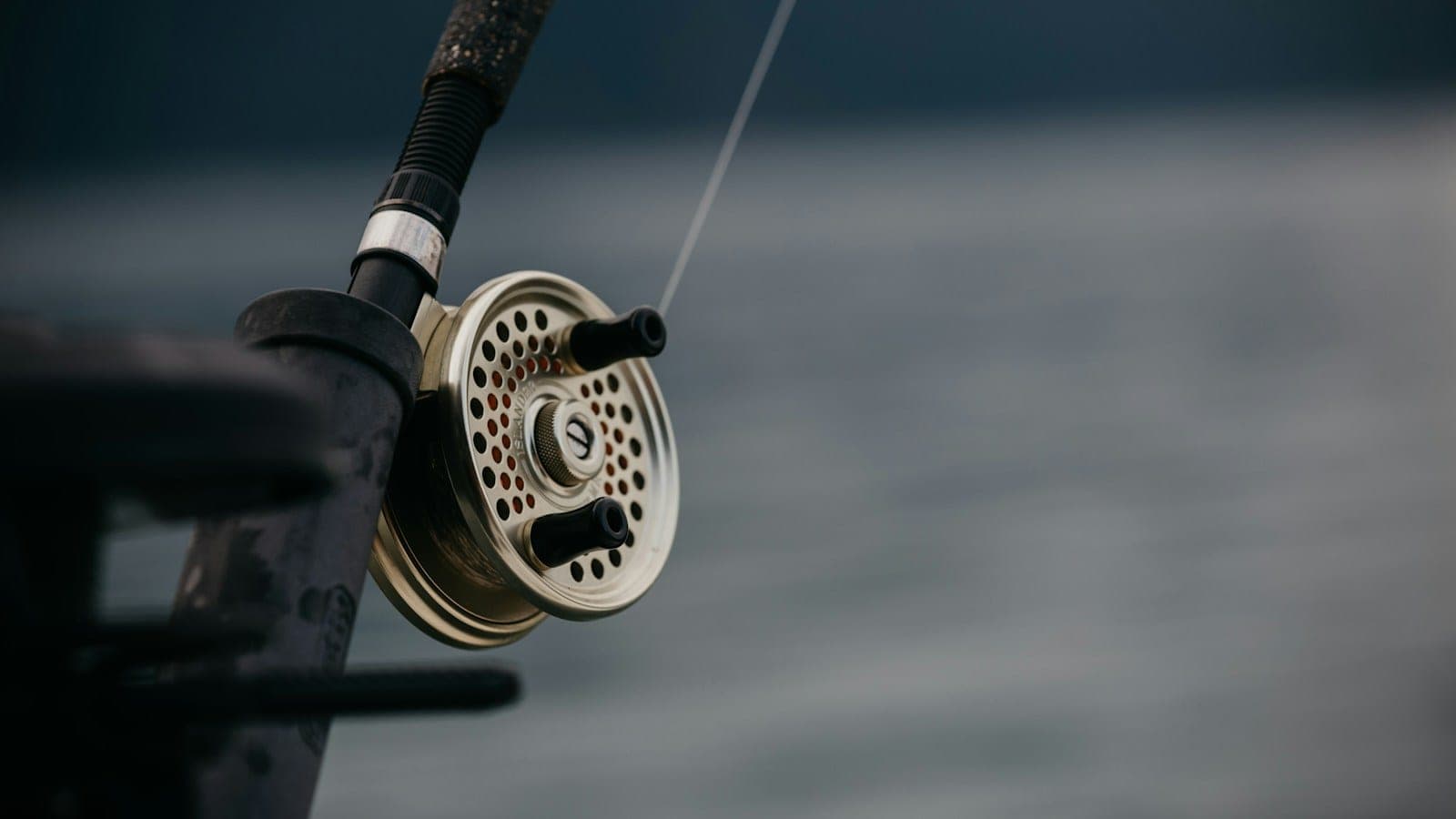
The knot is the weakest point between you and a fish, and the one part of your tackle you make yourself. Five knots cover nearly everything most anglers do: the Palomar and the improved clinch for hooks and lures, the uni for almost anything (two make the uni-to-uni line join), the FG for joining braid to a leader, and the San Diego jam for fluorocarbon.
Before you tie anything
- Leave plenty of tag. Pull 6 to 10 inches of line through the eye; short tags lead to sloppy wraps.
- Wet the knot before you tighten it. Friction from a dry knot heats and weakens monofilament and fluorocarbon; water or saliva lets the wraps slide into place.
- Tighten in one smooth pull. A jerk cinches the wraps unevenly.
Braid is thin, slick and has no stretch, so knots that hold in mono can slip in it. Use more wraps, and stick to the Palomar, the uni with extra turns and the FG.
The Palomar knot
The Palomar is quick and holds well in every line type, braid included. Its drawback: the loop has to pass over the whole lure, awkward with big multi-treble lures.
- Double about 6 inches of line to make a loop, and push the loop through the hook eye.
- Tie a loose overhand knot with the doubled line, so the hook hangs from the bottom of the knot. Do not twist the lines.
- Pass the loop over the hook or lure so it falls behind the eye.
- Wet the knot and pull on both the main line and the tag together, so the loop tightens above the eye.
- Trim the tag.
Suits: braid, mono and fluorocarbon; hooks, small lures and swivels. It is also the standard drop-shot knot: leave a tag of 12 to 18 inches, tie on a drop-shot hook, then run the tag back down through the eye from the point side so the hook stands out with its point up. Clip a weight to the end of the tag.
The improved clinch knot
The improved clinch is the knot most people learn first, sound for monofilament and lighter fluorocarbon.
- Pass the line through the eye and pull 6 inches through.
- Wrap the tag around the main line 5 to 7 times: 7 in light line, 5 in line around 20 lb.
- Bring the tag back and pass it through the small loop just above the eye.
- Pass the tag through the big loop you just made between the wraps and the tag (the "improved" step).
- Wet the knot and pull the main line slowly, holding the tag so it does not slip back. The coils should stack into a neat spiral.
- Trim the tag.
Suits: monofilament and fluorocarbon up to about 20 lb; heavier wraps are hard to snug down.
The uni knot and the uni-to-uni
Many anglers would pick the uni as their one knot: it ties to a hook, lure or swivel, forms a loop, and two of them join two lines.
Tying the uni to a hook
- Pass the line through the eye and pull 8 inches through.
- Lay the tag back alongside the main line, then bend it back toward the eye to form a circle that sits over both lines.
- Wrap the tag around both lines, inside the circle, 5 to 7 times. Use 8 to 10 turns with braid.
- Wet it and pull the tag to close the wraps into a tight barrel.
- Pull the main line to slide the knot down to the eye.
- Trim the tag.
Stop at step 4 and the uni becomes a loop knot that lets crankbaits, jerkbaits and topwater baits swing freely. A fish may slide it to the eye, which does no harm.
Joining two lines with the uni-to-uni
The double uni joins braid to a leader, or repairs a broken line.
- Overlap the two line ends by about 8 inches, pointing in opposite directions.
- With the first tag, tie a uni knot around the other line: form the circle, then wrap through it. Use 5 or 6 wraps in mono or fluorocarbon and 8 to 10 in braid.
- Snug that knot, but do not pull it hard yet.
- Tie a second uni with the other tag around the first line.
- Wet both knots and pull the two main lines apart so the knots slide together and seat against each other.
- Trim both tags.
Some anglers double the braid end for extra grip. The uni-to-uni is quick but bulkier than the FG, and with a heavy leader it can tick through the guides.
The FG knot
The FG joins braid to a leader with a slim, tapered connection that slips through the guides with almost no catch, which matters when a long leader sits on the spool, as in surf and inshore casting. It takes the longest of the five to learn.
- Put the braid under tension: hold its end in your teeth or clip it to something fixed, and hold the rod out with the drag set so the line runs tight.
- Lay the end of the leader across the braid, so it crosses at a slight angle.
- Wrap the braid around the leader, alternating: once over the top, once under the bottom, crossing the braid each time to build a tight weave. Most instructions call for 15 to 20 alternating wraps.
- Pinch the wraps so they cannot loosen, and tie a half hitch with the braid around the leader to hold them.
- Wet the wraps and pull the leader and the main braid hard in opposite directions. The weave should tighten and darken as it grips the leader.
- Tie 3 to 5 more half hitches with the braid tag around both lines.
- Trim the leader tag close, then finish with a few half hitches around the braid alone, and trim the braid tag.
A fluorocarbon leader such as Seaguar Blue Label 20 lb suits the FG and the uni-to-uni for most bass and inshore fishing. A small aluminum knot puller such as the GaiRen FG knot assist holds the braid under steady tension for step 3.
Suits: braid to fluorocarbon or mono leaders, from 10 lb finesse to heavy shock leaders.
The San Diego jam
The San Diego jam (or reverse clinch) is widely used by bass anglers fishing fluorocarbon. It seats evenly in stiff, slick lines.
- Pass the line through the eye and pull 8 to 10 inches through.
- Hold the hook in one hand with the main line and the doubled tag, keeping a finger between the two lines to hold a gap.
- Wrap the tag around both lines 6 to 8 times, working back toward the hook; use fewer wraps in heavier line.
- Pass the tag through the small loop just above the eye.
- Then pass it through the loop your finger was holding open at the top of the wraps.
- Wet the knot, hold the tag in place and pull the main line to tighten.
- Trim the tag.
Suits: fluorocarbon and monofilament, roughly 8 to 25 lb; not braid.
Which knot for which line
| Knot | Job | Braid | Fluorocarbon | Mono |
|---|---|---|---|---|
| Palomar | Line to hook, lure or swivel | Yes | Yes | Yes |
| Improved clinch | Line to hook, lure or swivel | No | Up to about 20 lb | Up to about 20 lb |
| Uni | Line to hook or lure; loop knot | Yes, 8–10 wraps | Yes | Yes |
| Uni-to-uni | Line to line | Yes | Yes | Yes |
| FG | Braid to leader | Main line | Leader | Leader |
| San Diego jam | Line to hook or lure | No | Yes | Yes |
For choosing the line itself, read mono, fluoro or braid: picking fishing line.
Trimming the tag
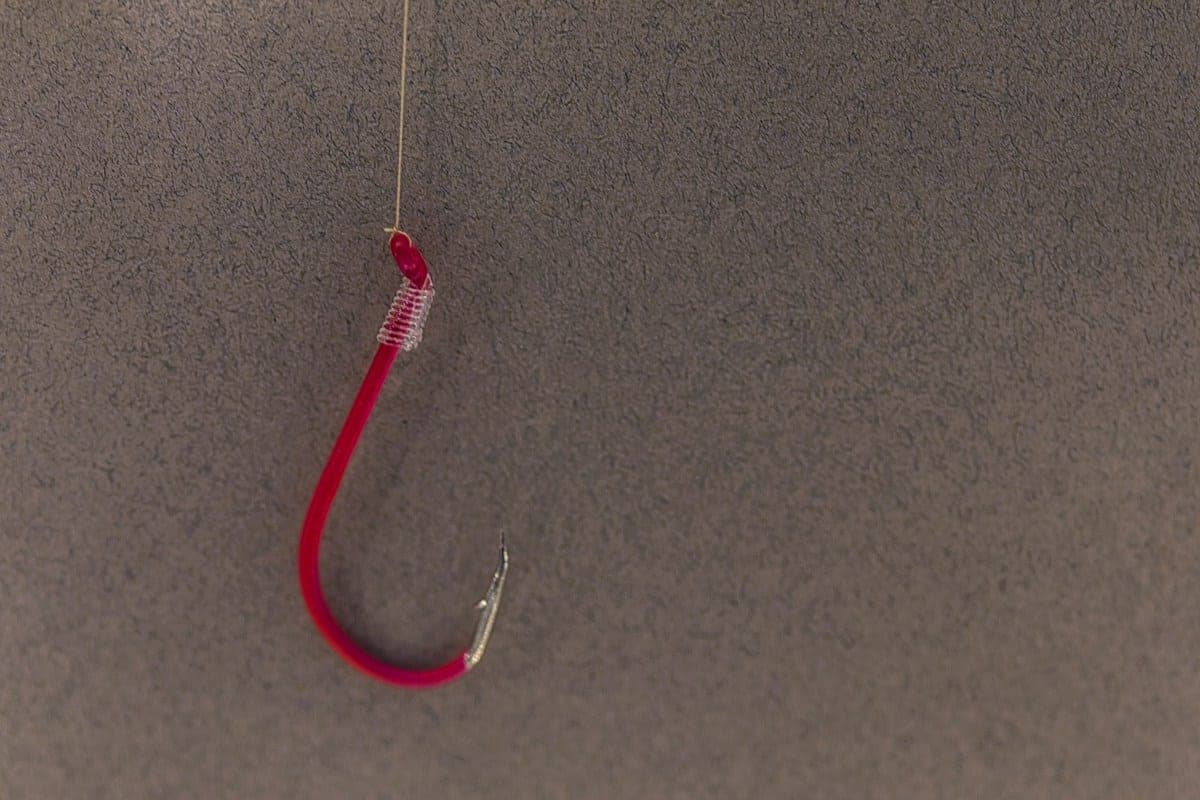
Trim mono and fluorocarbon tags to about 1/8 inch, a margin if the knot settles. Never burn a mono tag with a lighter; the heat can soften the knot.
Braid slides out of most clippers; serrated scissors such as the Cuda micro scissors grip the fibers instead. Leave braid tags around 1/4 inch.
For tiny hooks in cold or low light, a knot tool with a line cutter such as the HOOK-EZE holds the hook while you wrap. Browse other knot tools.
How to check a knot
- Look at it. The wraps should be even and snug, with no line crossing over itself. Cloudy or kinked mono or fluorocarbon at the knot has likely been damaged by friction; retie.
- Pull it. Hold the hook with pliers, wrap the line around a pen or gloved hand, and pull hard and steadily. Never wrap braid around bare fingers; it can cut skin.
- Read a broken knot. If a knot fails and the tag end is curled like a pigtail, the knot slipped rather than snapped. Add wraps or switch knots.
- Compare knots at home. Tie two knots on the ends of one piece of line and pull them against each other; the one that breaks first is weaker in that line.
Retie after a good fish, a snag or a few hours of casting, and cut back line that feels rough.
Practice at home
Tie each knot ten times at home with thick mono and a hook with its point covered. These knots work with the swivels and leaders in swivels, snaps and leaders: when you need them, and the FG and uni-to-uni tie the surf shock leader in your first surf fishing setup.