Buying guide · 7 min read
Swivels, snaps and leaders: when you need them
Which small hardware earns a place on your line, which gets in the way, and how long and heavy to make a leader.
Updated
First Cast Fishing earns a commission when you buy through links on this site, at no extra cost to you. Affiliate disclosure
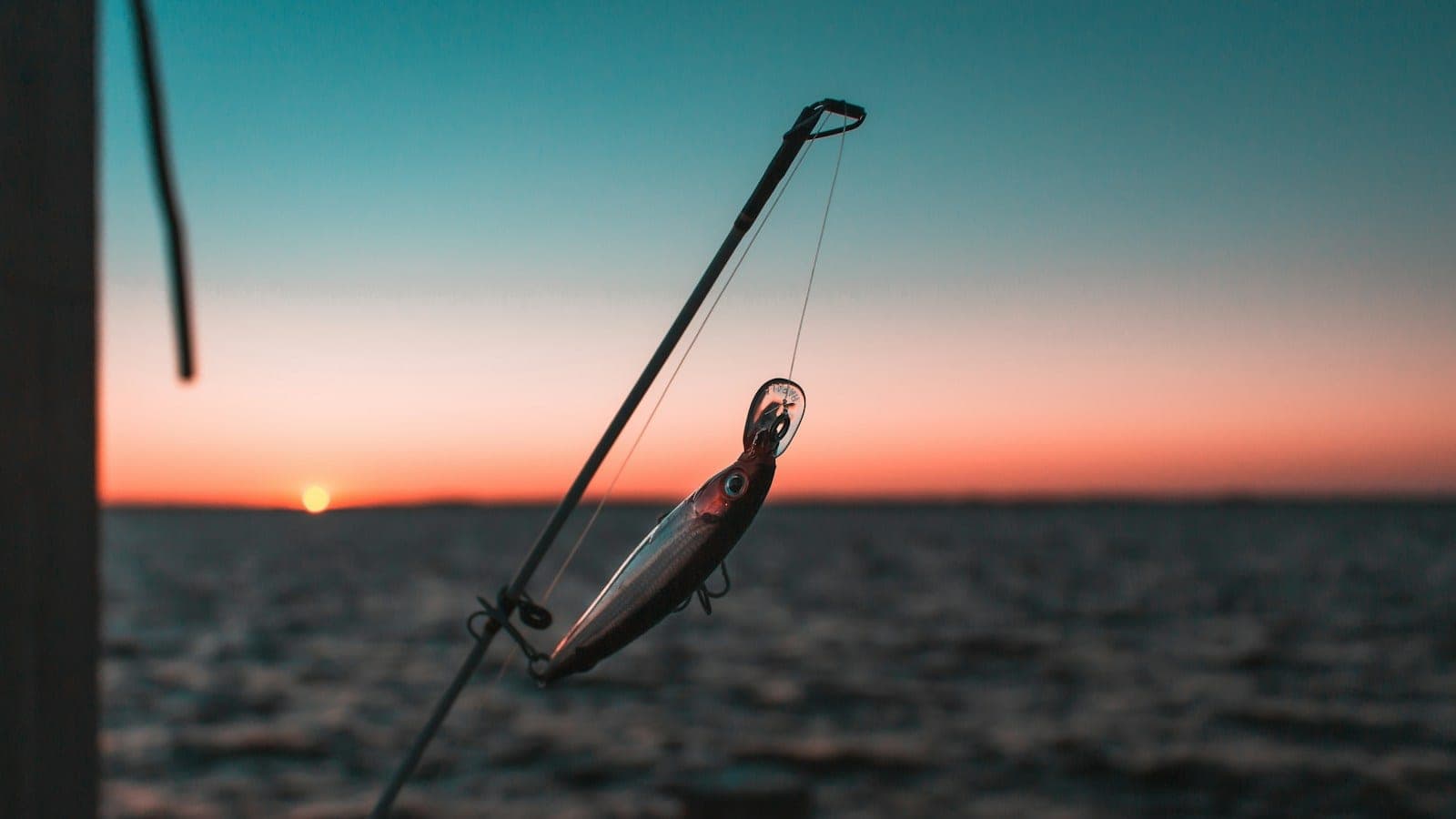
Swivels, snaps, split rings and leaders are the smallest things in a tackle box, and the easiest to get wrong. Used well, they stop line twist, speed up lure changes and keep a pike's teeth off your line. Used out of habit, they weigh down the front of a lure, catch weeds and give a wary fish something shiny to look at. This guide covers each one's jobs and when to leave it off.
Barrel swivels
A barrel swivel is two wire eyes joined by a small brass or steel barrel, so each end can turn on its own. It does three jobs:
- Stops line twist. A bait that spins, such as a cut-bait strip or a trolled spoon, twists the line above it. A swivel lets the section below turn on its own.
- Stops a sliding weight. On a Carolina rig or a fish-finder rig, the swivel is the stop that keeps an egg or pyramid sinker from sliding down to the hook.
- Joins main line to leader. Tie the main line to one eye and the leader to the other: simpler than a line-to-line knot, and quick to change.
Barrel swivel sizes run backward: the bigger the number, the smaller the swivel. As a rough guide, a size 10 or 12 suits 6 to 12 lb line, and sizes 5 to 7 suit heavier saltwater and catfish rigs. Strengths differ between brands, so choose the smallest swivel whose rated strength is comfortably above your line's. A pack of mid-size swivels such as these AMYSPORTS size 7 barrel swivels covers many bottom rigs. Black or dark finishes show less than bright brass.
Ball-bearing swivels
A ball-bearing swivel keeps turning under heavy load, when a plain barrel swivel binds up. Use one where twist is constant:
- trolling spoons, dodgers and flashers
- inline spinners, which twist line on every cast
- drifting bait in strong current
- big-game rigs, where a barrel swivel would lock under a heavy fish
A plain barrel swivel is fine for most casting and bottom fishing. Most ball-bearing swivels are numbered the other way from barrel swivels, with larger numbers for larger swivels, so go by the strength on the pack. A pack such as these AMYSPORTS size 1 ball-bearing swivels suits trolling spoons and inshore rigs; drop to size 0 or smaller for light lines.
Three-way swivels
A three-way swivel has three eyes on one ring. Tie the main line to one, a dropper with a sinker to the second and a leader with your bait or lure to the third. The weight bounces along the bottom while the bait rides above it, a common rig for drifting and slow-trolling for walleye, catfish, salmon and steelhead. Two tips:
- Make the sinker dropper 6 to 18 inches long, from lighter line than the main line, so a snagged weight breaks off and you keep the rest of the rig.
- Make the bait leader 18 inches to 4 feet. Longer leaders let bait drift more naturally in slow water.
A ball-bearing three-way such as these Dr.Fish size 10, 35 lb three-way swivels keeps turning when a drifting bait spins in current.
Snaps and snap swivels
A snap is a small wire clip that opens and closes on a lure's eye. A snap swivel is a snap joined to a swivel. Both let you change lures in seconds without retying, handy in cold weather or when you need to try several baits quickly.
Common types:
- Duo-lock snaps: a wire loop that hooks over itself. Small, strong and easy to open.
- Crosslok and coastlock snaps: a locking bend that holds under heavy load; common in saltwater.
- Round-nose crankbait snaps: a small snap with a rounded end so the lure eye rides freely.
- Speed clips: an open, springy wire clip with no swivel. Very small and fast to use; check the strength on the pack.
When a snap helps lure action
A crankbait, jerkbait or lipless bait swings freely from a small snap, as it would from a loop knot, and often works better than on a tight knot. Many bass anglers clip crankbaits on small round-nose snaps, such as these BRILISLE size 00 crankbait snaps with a 35 lb strength, to switch baits between banks. If a crankbait already has a split ring on its eye, tie straight to the ring.
When a snap hurts
- Jigs and Texas rigs. A jig is designed to hang from a fixed line tie; a snap lets it swing, collects weeds and catches in cover. Tie straight to the eye.
- Topwater baits. A heavy snap swivel adds weight to the nose and can make a popper or walking bait sit nose-down. Use a small snap or a loop knot instead.
- Lures that do not spin. A snap swivel on a crankbait or jerkbait adds hardware the bait does not need, and the swivel can foul the front treble. Save snap swivels for spinners, which spin, and spoons, which can roll and twist line on a fast retrieve.
- Clear water and wary fish. Fish can see shiny metal in front of the lure.
- Big fish on small snaps. A small snap can open under a heavy fish. Check the rating, and step up a size for pike, big bass and saltwater fish.
Split rings
A split ring is a flat wire ring wound twice, like a tiny key ring, that joins hooks to a lure's hangers and often sits on a crankbait's eye. You need them when you:
- replace rusty or blunt trebles with new treble hooks
- swap a treble for a single hook
- add a ring to a lure eye to give it more freedom to swing
Match the ring to the hook and fish: too light opens under a big fish, too heavy deadens a small bait. Open rings with split-ring pliers, whose hooked tooth slides between the coils. Browse swivels, snaps and split rings for assortments that come with pliers.
Fluorocarbon leaders
A fluorocarbon leader is harder for fish to see than braid and stands up to rock, shell and wood far better. Run one on braid in clear water, and around structure that would fray braided line. Mono, fluoro or braid: picking fishing line covers why you would pair the two.
Heavy fluorocarbon also works as a bite leader for rough-mouthed fish such as snook and tarpon, and instead of wire for pike in very clear water. Typical weights, though practice varies:
- Finesse bass, trout, walleye: 6 to 10 lb
- Bass jigs, swimbaits, inshore redfish and trout: 12 to 25 lb
- Snook, bluefish, light pike work: 30 to 50 lb
- Pike and musky without wire: 60 to 100 lb, often called hard fluorocarbon
Join it to braid with a uni-to-uni or an FG knot; both are in five fishing knots worth learning first. Browse spools in leader material.
Wire leaders for toothy fish
Pike, musky, bluefish, mackerel, barracuda and sharks can bite through monofilament and fluorocarbon with one chomp. Wire stops them.
- Pre-made wire leaders usually come with a swivel on one end and a snap on the other, the simplest way to start. These Berkley Steelon wire leaders, 18 inches and 45 lb, are a common length for casting to pike.
- Nylon-coated 7-strand wire is supple, ties or crimps easily and kinks less than bare wire.
- Single-strand wire is stiff and thin. It suits trolling and toothy saltwater fish, but it kinks; replace it once it has a kink.
- Titanium wire stretches a little and springs back straight after a fish instead of kinking.
Wire can mean fewer bites in clear water and dulls small lures. When bites are scarce, try heavy fluorocarbon; when you keep losing lures to bite-offs, go back to wire.
How long should a leader be?
It depends on what the leader is for.
| Leader | Typical length | Why |
|---|---|---|
| Fluorocarbon on braid, spinning, finesse | 4–8 ft | Keeps braid far from the lure in clear water |
| Fluorocarbon on braid, casting, jigs and worms | 3–6 ft | Abrasion and stealth; a shorter knot-to-lure run casts cleanly |
| Inshore saltwater bite leader | 2–3 ft | Protects against shell, barnacles and rough mouths |
| Wire for pike, casting lures | 9–18 in | Covers the depth of a pike's mouth on a hard strike |
| Wire or heavy fluorocarbon for musky | 12–36 in | Bigger fish, bigger strikes, longer lures |
| Surf shock leader | About twice the rod length | Several turns stay on the spool when you cast a heavy sinker |
If the leader knot is bulky, keep the leader short enough that the knot stays outside the guides when you cast; a slim knot like the FG can sit on the reel. Retie the leader once it feels rough or has a kink; it takes all the wear.
A starter kit
- A pack each of small and medium barrel swivels
- A few ball-bearing snap swivels for spoons and spinners
- Small round-nose snaps for crankbaits
- A pack of three-way swivels if you drift or troll
- Split-ring pliers and an assortment of rings
- A spool of fluorocarbon leader material to match your fishing
- Pre-made wire leaders if pike, bluefish or other toothy fish live where you fish
Keep them in a small divided box; organizing a tackle box has ideas for that.