Technique · 6 min read
Ice fishing lures: spoons, jigging raps and tungsten jigs
Spoons call fish in, darters trigger them and tiny jigs close the deal. Sizes, tipping and jigging cadence for panfish, perch, walleye and trout.
Updated
First Cast Fishing earns a commission when you buy through links on this site, at no extra cost to you. Affiliate disclosure
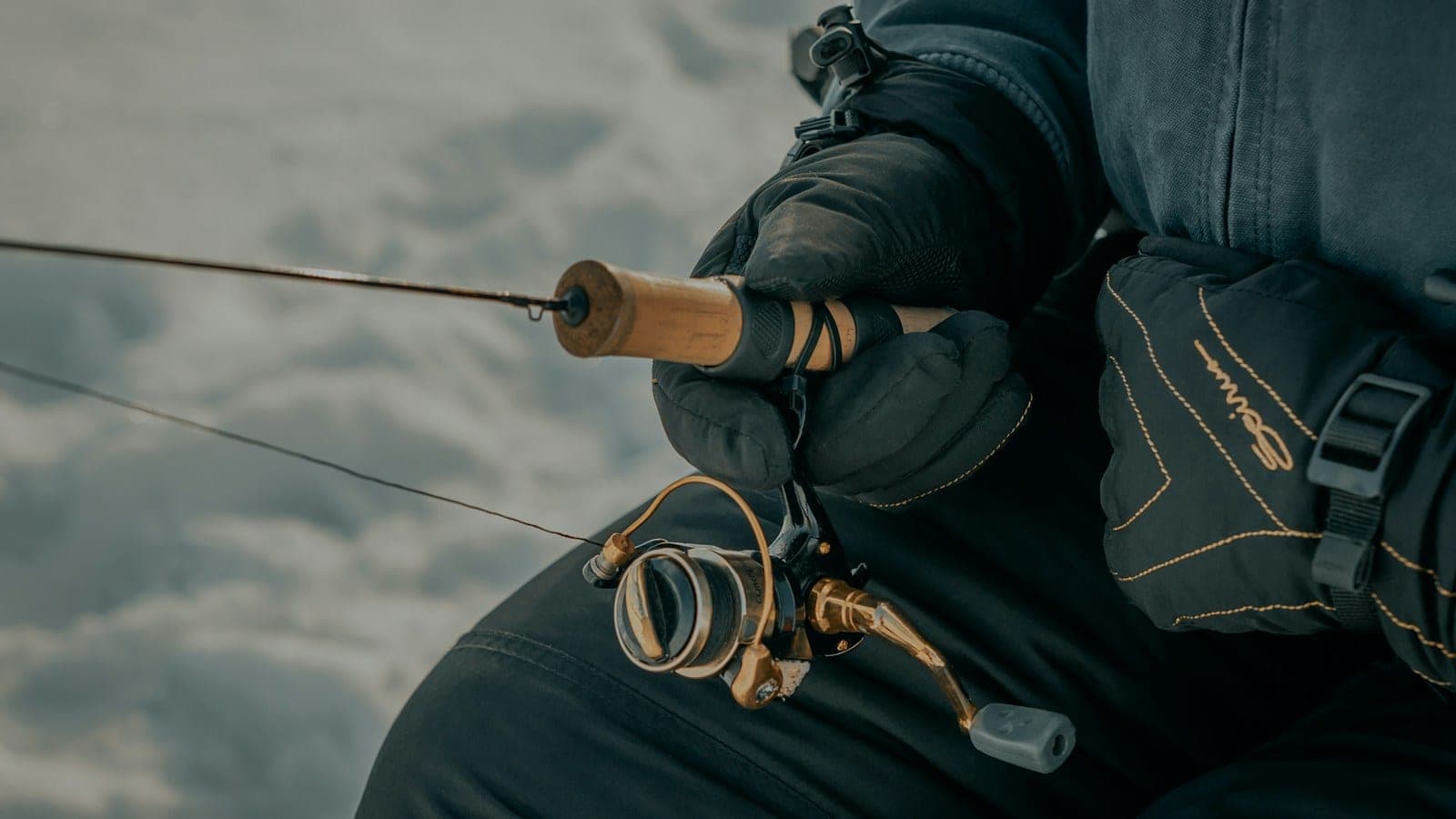
Ice fishing is vertical fishing. Your lure hangs straight below the hole, and everything it does comes from how you lift, drop and pause the rod. Three families of lures cover almost every situation under the ice: jigging spoons, which flash and flutter to draw fish in; darters and jigging raps, which swim out to the side on each lift; and small jigs, often tungsten, tipped with bait for fish that only want a nibble. This guide explains each, how to tip them, how to work them, and what size to tie on for panfish, perch, walleye and trout.
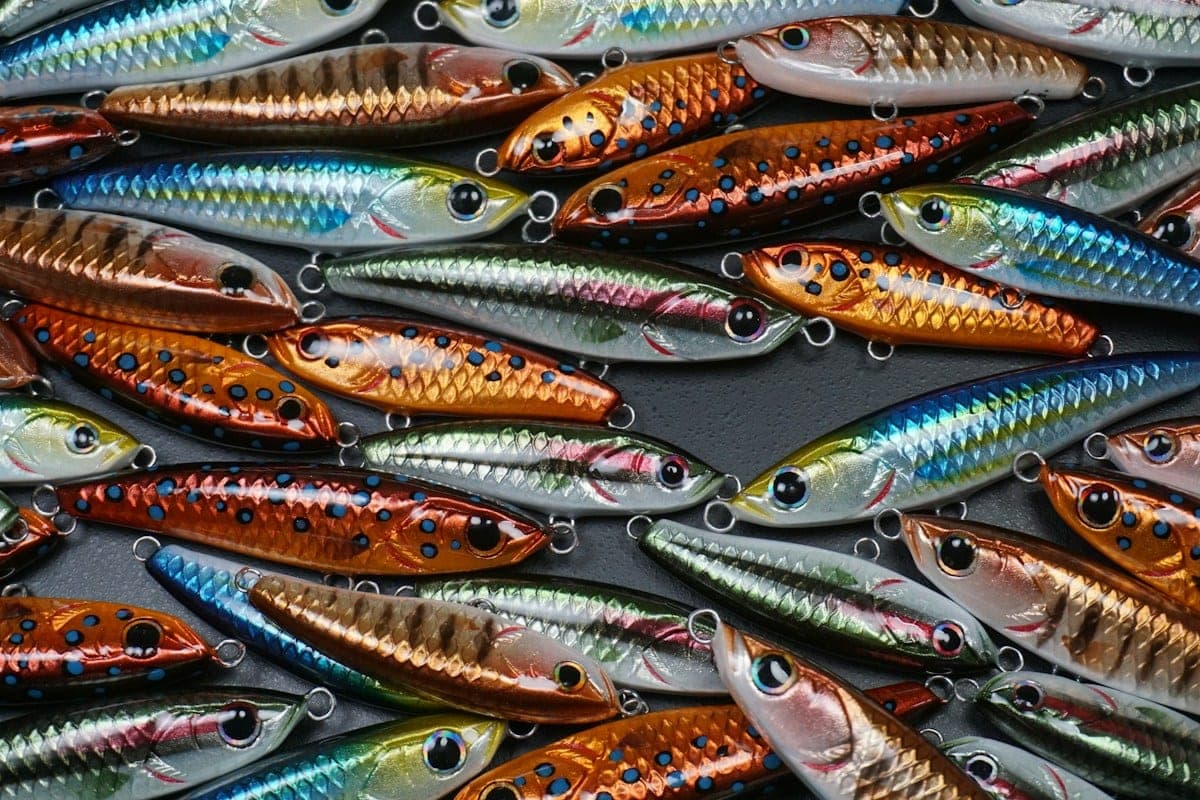
Jigging spoons
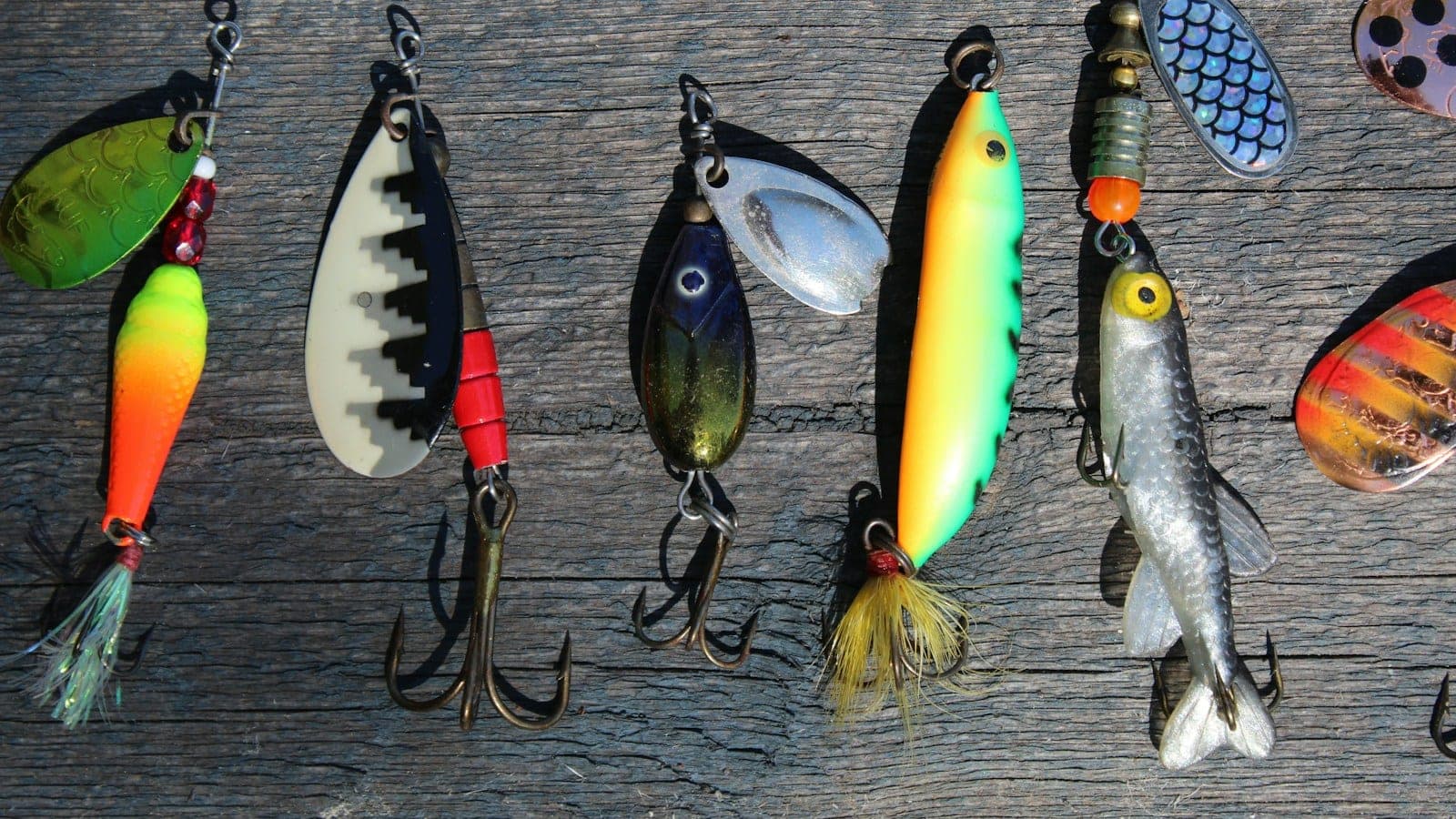
A jigging spoon is a heavy, narrow piece of metal with a treble hook. Lift it a foot or two and it flashes on the way up; let it fall and it flutters and wobbles back down, which is when many fish bite. Spoons sink fast, so they get through deep water quickly, and their flash pulls fish in from farther away than a tiny jig can.
The Bay de Noc Swedish Pimple is a classic narrow ice spoon. The 1/4 oz size in nickel suits walleye and large perch, and the spoon comes in lighter sizes for panfish. Browse more in rattle and jigging spoons.
Rattle and flutter spoons
Rattle spoons have a chamber of steel or glass beads that clicks when you shake the spoon. The sound helps in stained water, deep water and low light, when fish find food by feel and hearing as much as sight. The Northland Buck-Shot rattle spoon in 1/16 oz is a small rattle spoon for perch and crappie; heavier sizes suit walleye.
Flutter spoons are thin and wide. They fall slowly and swing from side to side, which works when fish are suspended or reluctant to chase.
Dropper spoons hang the treble on a short chain below the spoon, so the hook and its bait dangle and swing on their own. Fish that nip at the bait are more often hooked.
Tipping a spoon
Most anglers add a little bait to the treble: a minnow head (pinched off behind the gills) for walleye and perch, or two or three maggots on one hook for panfish. Hook bait on one point of the treble only, and keep it small. Too much bait kills the spoon's flutter.
Darters and jigging raps
A darter is a weighted, minnow-shaped lure with a tail fin and a line tie on its back. Lift it sharply and it swims out to one side, then glides back in a circle as it falls. That wide, darting swim covers more water around the hole than a spoon and draws walleye and pike from a distance.
The Rapala Jigging Rap is a long-standing example. Size 7, about 2 3/4 inches and 5/8 oz, is a common walleye size; sizes 2 and 3 suit perch, and size 9 suits lake trout and pike.
Jigging raps have single hooks at the nose and tail and a treble under the belly. Most anglers fish them with no bait, or with a minnow head on the belly treble when fish are slow. Tie on with a small loop knot or a small snap (not a snap swivel) so the lure can swing freely. Browse all darters and jigging raps.
Tungsten and lead ice jigs
Ice jigs are tiny jig heads, often 2 to 5 mm across, with small hooks from size 10 to 16. They are the main lure for bluegill, crappie and perch, and they catch trout and walleye on slow days too.
Tungsten is about 1.7 times as dense as lead. A tungsten jig is smaller than a lead one of the same weight, so it sinks faster and lets you fish a tiny profile in 20 or 30 feet of water without waiting for it to fall. That speed also helps you get back down to a school before it moves on.
Lead jigs are larger for their weight and fall more slowly. They suit shallow water and fish that take a lure on a slow drop. Many anglers carry both.
Shapes matter too. Teardrop and "horizontal" jigs have the line tie on top, so they hang level and present the hook and bait sideways to a fish instead of dangling straight down. The Kenders Wonderbread tungsten jigs are 3 mm glow-painted tungsten jigs on size 16 hooks, a size for bluegill and crappie in clear water.
Tipping a jig: live bait or plastics
- Waxworms and maggots (spikes): the standard panfish bait. One waxworm, or two or three spikes, hooked through one end so they hang and wiggle.
- Small minnows: for crappie and walleye on larger jigs.
- Soft plastics: tiny tails and minnow shapes that add movement without live bait. The 13 Fishing Paralyzer is a 25 mm panfish ice plastic. Plastics stay on the hook through several fish and do not freeze as quickly as live bait.
Browse every style in ice jigs.
Jigging cadence: call, then close
Ice fish are often drawn in by noise and movement and then caught on something subtle. Most anglers work in two stages.
- Call fish in. Lift a spoon or rap 1 to 2 feet sharply, follow it down with the rod tip so the line stays nearly tight and shows a bite on the fall, and pause for 2 to 5 seconds. Repeat. With a rattle spoon, add a quick shake at the top of the lift. If you have a flasher, you will see fish rise toward the lure.
- Close the deal. When a fish comes in, stop the big lifts. Give the lure small jiggles of an inch or less, or a slow quiver, and then hold it still. Many fish bite the still lure.
- Watch the line and rod tip. Ice bites are tiny. A fish that takes a jig from below and swims up makes the line go slack, not tight. Set the hook on any twitch, pause or slack.
If fish come in and leave, downsize the lure or switch from a spoon to a jig. If nothing shows, get louder and move to another hole.
Sizes by species
| Species | Spoon | Darter or jigging rap | Jig | Line |
|---|---|---|---|---|
| Bluegill and crappie | 1/16–1/8 oz | Rarely used | 2–4 mm tungsten, size 12–16 hook | 2–4 lb |
| Perch | 1/16–1/4 oz with a minnow head or spikes | Size 2–3 | 4–5 mm tungsten | 3–6 lb |
| Walleye | 1/8–1/2 oz, rattle spoons in stained water | Size 5–7 | Larger jigs with a minnow | 6–10 lb |
| Stocked rainbow and brook trout | 1/16–1/8 oz | Size 2–3 | Small jig with a waxworm or plastic | 3–6 lb |
| Lake trout | 1/2–1 oz | Size 7–9 | Large tube jigs, 1/2–1 oz | 8–12 lb |
These are starting points. Go lighter in clear, shallow water and heavier in deep water or wind.
Color and rod
Glow colors help in deep water, at dawn and dusk and under thick snow cover. Recharge them with a light every few drops. Silver, gold and natural perch colors work in clear water. Our guide to matching lure color to water clarity explains the rest.
Small jigs need a light rod with a soft tip that shows the bite; spoons and raps need a stiffer rod to snap them up. See choosing an ice fishing rod and reel. For open-water spoon fishing, read spoons for every season. Set a tip-up or two beside your jigging hole and you fish two ways at once.
A small starter box
- Three tungsten jigs in 3 to 4 mm, in glow and natural colors.
- A pack of panfish plastics.
- Two jigging spoons, 1/8 and 1/4 oz.
- One rattle spoon.
- One jigging rap in size 5 or 7.
Browse the whole range in ice fishing lures.