Buying guide · 7 min read
Choosing an ice fishing rod and reel
Length, power, tip and reel type for panfish, walleye and pike, plus the line that keeps working at 10°F.
Updated
First Cast Fishing earns a commission when you buy through links on this site, at no extra cost to you. Affiliate disclosure
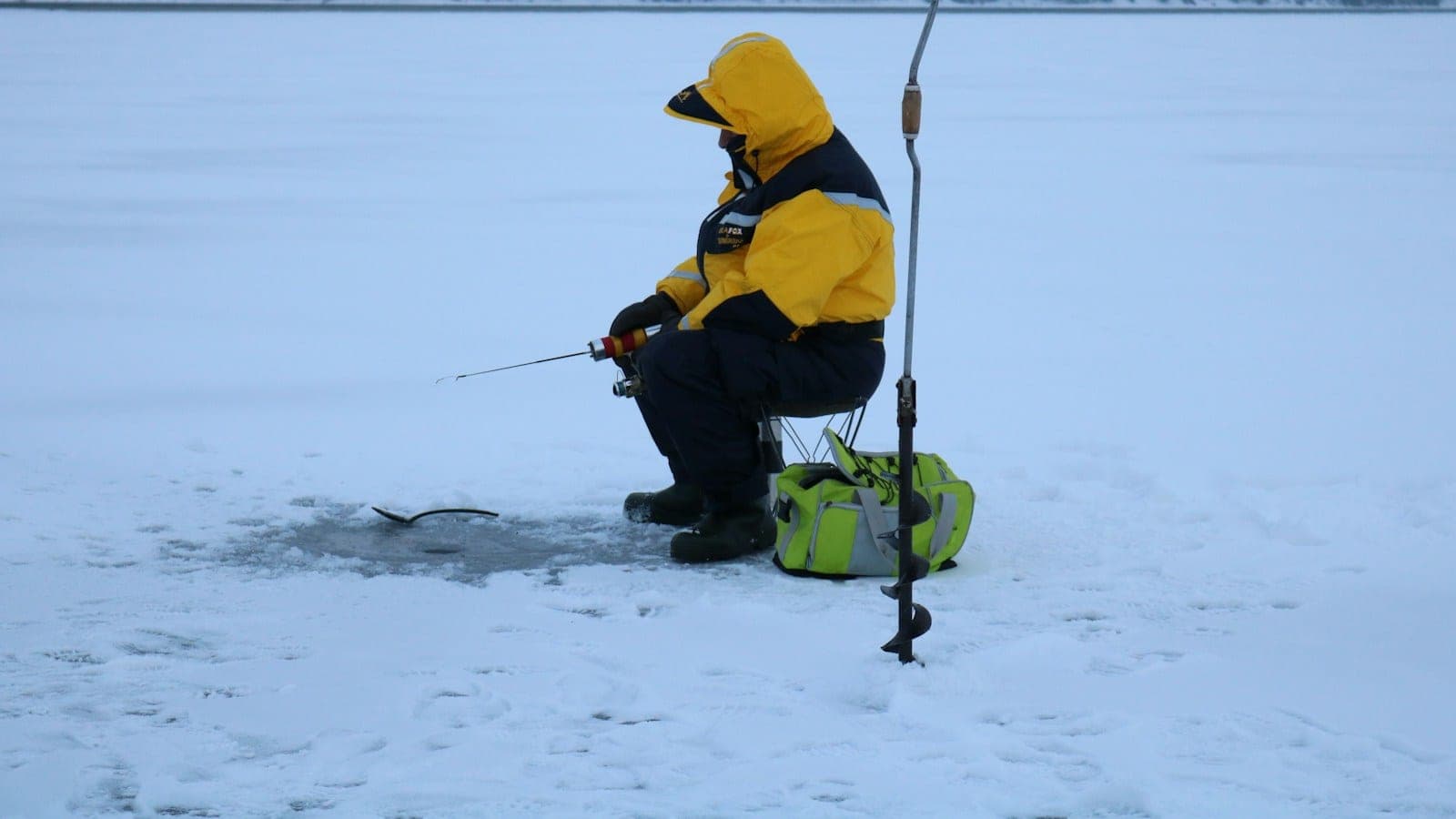
An ice rod looks like a toy next to an open-water rod, but it does a particular job: you fish straight down, often in a shelter, with lures that can weigh less than a gram, for fish in water just above freezing. This guide covers length, power and tip by species, spring bobbers, spinning and inline reels, cold-weather line and combos. If you are putting together your whole kit, start with your first ice fishing kit and come back here for the rod.
Length: 24 to 36 inches
Most ice rods run from 24 to 36 inches, a trade between control and leverage.
- 24 to 28 inches suits panfish and perch, fishing inside a shelter, and sitting right over the hole. A short rod keeps the tip close to the water, where you can watch it and the line together, and fits in a hub shelter.
- 28 to 32 inches is the all-round length for walleye and mixed bags. It still works inside a shelter and gives you more lift on a hook set in 20 to 30 feet of water.
- 32 to 36 inches and longer suits pike, lake trout and big walleye, and fishing outside where you stand. The extra length takes up more line on the hook set and helps steer a big fish away from the edge of the hole.
Power and action by species
Power is how much force it takes to bend the rod; action is where it bends (rod power and action covers both). On the ice, match them to the lure weight and the fish.
| Target | Power | Action | Lure weight | Line |
|---|---|---|---|---|
| Bluegill, crappie, perch | Ultralight to light | Fast, or a soft noodle tip | 1/64 to 1/16 oz | 1 to 4 lb |
| Walleye, big perch | Medium-light to medium | Fast | 1/8 to 3/8 oz | 4 to 8 lb, or 8 to 10 lb braid with a leader |
| Pike, lake trout | Medium-heavy to heavy | Fast to moderate | 1/2 oz and up | 10 to 20 lb braid with a fluorocarbon leader |
For panfish, a sensitive tip matters most. Bluegill and crappie often bite by rising with the jig, so the line goes slack instead of tugging, and a soft tip or a spring bobber shows that. The St. Croix Legend Black Ice is a 24-inch ultralight rod, short enough for a shelter and light enough to show a tiny jig.
For walleye, step up to a medium or medium-light rod with a fast action. You need a tip that jigs a spoon or a jigging rap with snap, and a backbone that drives a hook into a hard mouth 25 feet down. The 13 Fishing Widow Maker is a 28-inch medium rod with a fast action, the length and power this job calls for.
For pike, most anglers fish tip-ups and jig on the side with a medium-heavy rod of 32 to 36 inches, which handles large spoons, big jigging baits and a pike thrashing at the hole. See tip-ups explained for the other half of a pike setup.
Jigging rods and deadsticks
Many anglers fish two rods at once: one they jig and one they leave still with a live minnow, called a deadstick. A jigging rod wants a fast tip that moves the lure crisply. A deadstick wants a soft, slow tip that bends under the bait's weight, so a fish takes the minnow without feeling resistance and you see the tip load. Deadstick rods are often 28 to 36 inches or longer, with a very soft upper third.
Spring bobbers
A spring bobber is a thin wire or flat spring that sticks out from the rod tip, with the line running through it. It shows bites a stiff rod never would.
How to set one up:
- Slide it onto the rod tip, or clip it on, depending on the style.
- Tie on your jig and lower it to the fish.
- Adjust the spring's length or position until the jig's weight bends it slightly below level. Too stiff and it will not move on a bite; too soft and it droops straight down.
A dip means a fish pulled down. A spring that rises back toward level means a fish lifted the jig, which is the bite most anglers miss. Set the hook on either.
Spring bobbers suit light jigs and panfish, and some walleye anglers use them with small spoons in slow conditions.
Reels: spinning or inline
Ice reels come in two kinds, and the choice affects line twist and drop speed.
Spinning reels
A small spinning reel, usually a size 500 to 1000, has a smooth drag and a fast retrieve for bringing a walleye up from 30 feet.
The downside is line twist. Line leaves a spinning spool in coils, and a light jig spins as it sinks; over a day the line kinks and the jig turns in circles. To manage it:
- Use a reel with a wider spool, which lays line in larger coils.
- Spool only as much line as you need; 50 to 75 yards is plenty on the ice.
- Every so often, let the line hang with no lure in deep water, or drag it behind you on the ice, to untwist it.
Inline reels
An inline reel looks like a small fly reel. The spool sits in line with the rod, so line comes off straight with almost no twist, and light jigs hang still, which matters when panfish are staring at a bait.
Most inline reels have a low gear ratio, around 2.5:1 to 2.7:1: fine in 15 feet of water, tedious in 40. Many have a free-spool lever so the lure drops on its own, and some a magnetic brake to control the drop. The Piscifun ICX Frost is an inline reel with a 2.7:1 ratio, built in left- and right-hand versions.
Most inline reels cannot switch the handle to the other side, so pick the left- or right-hand retrieve that suits your reeling hand.
Which to choose: an inline reel for panfish and light jigs, a spinning reel for walleye, deep water and heavier lures. Many anglers end up with one of each. For more on drag, gear ratio and spool size, see baitcaster or spinning reel. Ice reels see snow, slush and thaw cycles; reel maintenance covers their care.
Ice line
Ordinary line gets stiff in the cold and holds the coils from the spool, and some lines pick up water that freezes in the rod guides. Ice fishing line is made to stay soft at low temperatures.
- Monofilament ice line is the starting point for panfish: supple, forgiving, and stretchy enough that a light hook does not tear out. Sufix Ice Magic is a monofilament ice line, here in 2 lb and a high-visibility orange that makes line movement above the hole easier to see.
- Fluorocarbon ice line sinks, stretches less and is harder for fish to see in clear water. Use it in 2 to 6 lb for panfish and walleye when the water is clear.
- Braided ice line has no stretch, so it shows every tick from a walleye jigging spoon in deep water. It also picks up water and freezes in the guides in very cold air, which is why many anglers use it inside a heated shelter. Tie on a 2 to 4 foot fluorocarbon leader.
Line weights follow the table above; tip-ups use their own thick line, covered in the tip-up guide. For the general trade-offs between line types, see mono, fluoro or braid.
Combos
A combo is a rod and reel sold together, already matched and sometimes spooled: the easiest way to start. Check the same three things as for a separate rod:
- Length. Short for shelters and panfish, longer for walleye and fishing outside.
- Power. Many combos are light panfish setups; match it to the fish you want.
- Reel type. Spinning or inline, as above.
The Ugly Stik GX2 Ice Fishing Combo comes with a 32 to 36 inch rod, a length that suits walleye and fishing outside a shelter. Browse more in ice fishing combos.
Handles, guides and other details
- Handles. Cork and foam stay warmer in bare hands than bare graphite or metal. A split or short handle saves weight on panfish rods.
- Guides. Larger guides take longer to ice up, and some rods use fewer, wider-spaced guides so there are fewer to clear.
- Two-piece or telescopic rods travel more easily but add a joint; most ice rods are one piece because they are already short.
A simple setup
If you want to buy once and cover most fishing:
- A 24 to 28 inch ultralight rod with an inline reel and 2 to 4 lb ice line, for panfish.
- A 28 to 32 inch medium rod with a size 500 to 1000 spinning reel and 6 lb line, for walleye.
- Later, a 30 to 36 inch deadstick rod for a live minnow, or a medium-heavy rod for pike.
Browse ice fishing rods and ice fishing reels, and always check the ice before you walk out: 4 inches of clear, solid ice is the commonly cited minimum for walking, ice thickness varies across a lake, and more is needed for anything heavier.