How-to · 6 min read
Organizing a tackle box: trays, bags and what goes where
Hard boxes, tackle bags with utility trays, or a backpack. How to sort by technique, keep hooks from rusting and pack for the bank or the boat.
Updated
First Cast Fishing earns a commission when you buy through links on this site, at no extra cost to you. Affiliate disclosure
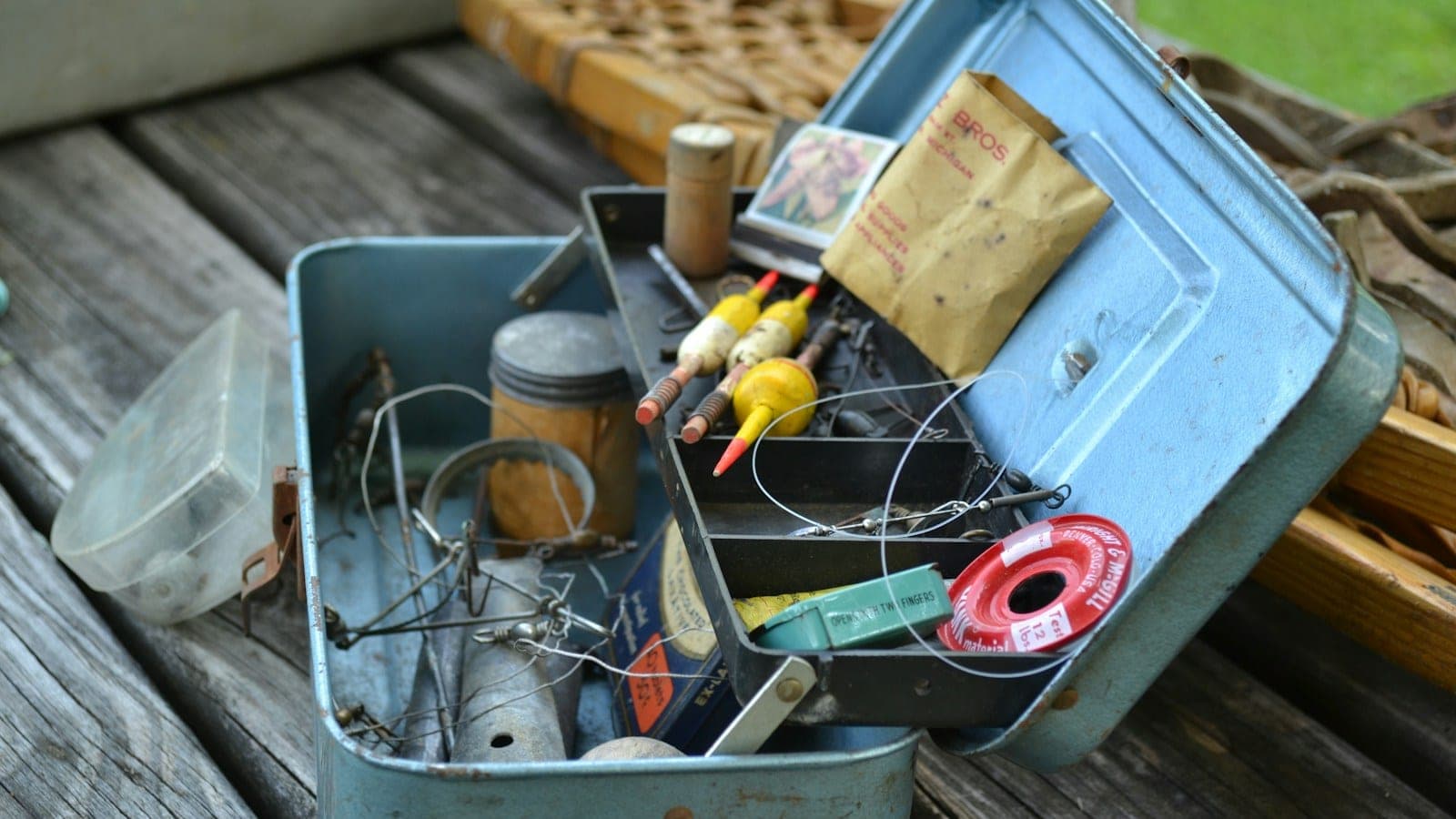
Most tackle boxes start organized and end up as one tangle of treble hooks, loose weights and worms melting into the tray. Fixing that is less about buying more storage than about choosing one system and sorting into it the same way every time. This guide covers the three main ways to carry tackle (a hard box, a soft bag full of utility trays, or a backpack), how to sort lures and terminal tackle by technique, how to store soft plastics, how to keep hooks from rusting, and what to pack for a bank trip compared with a day in the boat.
Hard box, tackle bag or backpack
| System | How it works | Suits |
|---|---|---|
| Hard tackle box | A plastic box with cantilever trays or drawers that fold out | Beginners, kids, pier and bank fishing, gear left in a car |
| Tackle bag with utility trays | A soft bag holding several flat, clear trays on edge, like books | Boat anglers, anyone who fishes several techniques |
| Tackle backpack or sling | A pack holding two to four trays plus tools, often with rod holders | Walking banks, wading, shore trips where you need both hands |
Hard boxes are simple and tough. Everything is visible when you open the lid. The drawback is that one box holds everything, so you carry all of it every trip, and a box knocked over in the boat spills every tray.
Tackle bags built around utility trays are the most flexible system. Each tray is a separate clear box with movable dividers, so you build a tray for each technique, pull the ones you need into the bag before a trip, and leave the rest at home. The trays are made in standard sizes:
- 3500: about 9 by 5 inches; good for terminal tackle and small jigs.
- 3600: about 11 by 7 inches; the common size for bank bags and backpacks.
- 3700: about 14 by 9 inches; the standard boat-bag tray, roomy enough for crankbaits and spinnerbaits.
Most bags and backpacks state which tray size they take, so pick the tray size first, then the bag. The Plano Guide Series tackle bag is a soft bag sized for 3700 trays, the boat-angler setup described above.
Backpacks and slings carry less, but they leave both hands free for a rod, a net and a bucket on a walk down the bank. Look for a pack that takes your tray size, has a rain cover or water-resistant fabric, and has outside loops for pliers. The Piscifun tackle backpack has rod holders and a rain cover, which suits a long walk to the water. More options are in tackle backpacks.
Sort by technique, not by lure type
The fastest way to find a bait on the water is to sort by how you fish it, not by what it is. When you decide to fish a shallow bank with a squarebill, everything for that job should be in one tray.
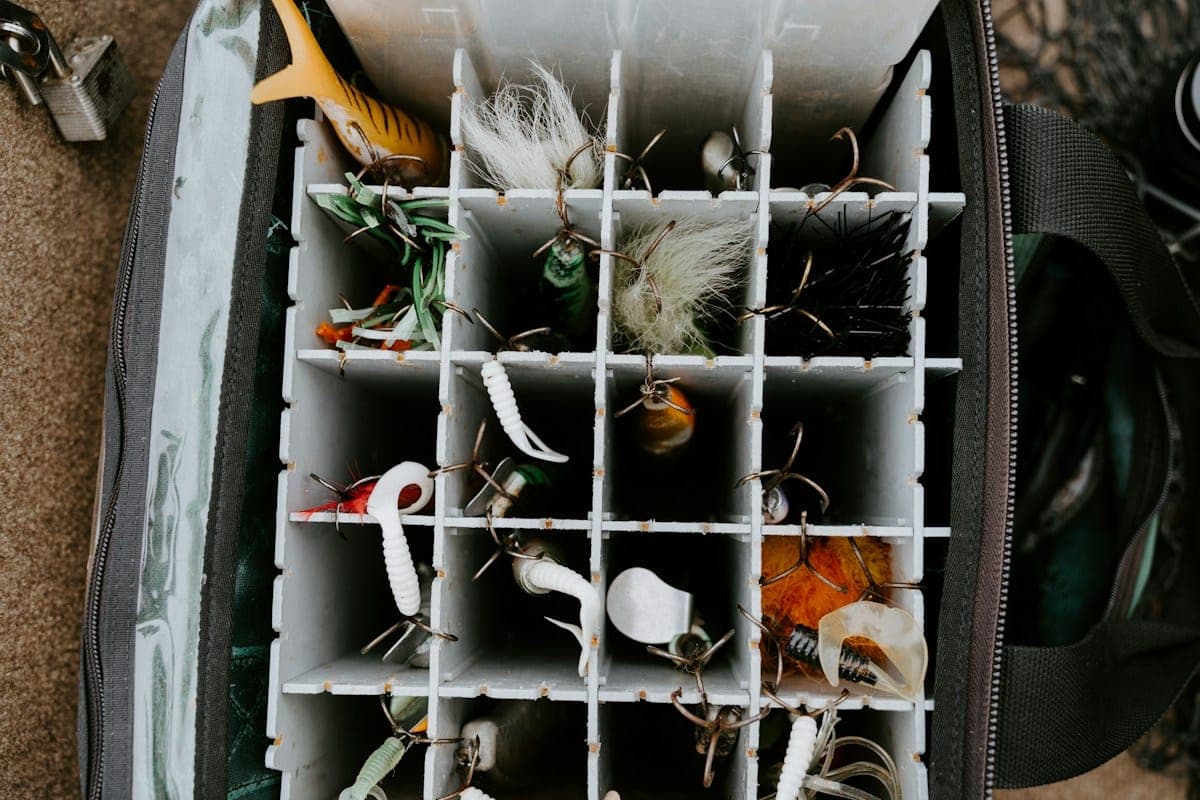
A typical set of trays for bass and panfish:
- Terminal tackle: hooks by style and size, bullet and drop-shot weights, split shot, swivels, snaps, bobber stops and beads. Use a tray with many small compartments. Our guides to hooks, jig heads and sinkers and swivels, snaps and leaders cover what to stock.
- Moving baits: crankbaits by depth, lipless baits, jerkbaits. Use larger compartments so treble hooks do not tangle; one bait per slot is ideal. The crankbait depth guide explains how to sort them.
- Wire baits and jigs: spinnerbaits, chatterbaits, bladed jigs and skirted jigs. Deep trays or a dedicated spinnerbait box keep the wire arms from bending. See spinnerbaits, chatterbaits and buzzbaits.
- Topwater: poppers, walking baits, prop baits and frogs.
- Panfish and trout: small jigs, inline spinners, bobbers and small hooks.
Within each tray, sort by size or depth from left to right, and by color within that. Put the baits you use most at the end nearest the latch.
Soft plastics: binders and their own trays
Soft plastics need separate storage for three reasons. They tangle hooks, they leak scent oil and salt onto everything around them, and some formulas soften or bleed color into other plastics. Certain plastics can also react with the plastic of some trays; many boxes are labeled "worm-proof" for that reason.
The simplest system is to keep worms in the bags they came in and store those bags in a binder. A soft-bait binder has zippered or resealable sleeves, so you flip to "Texas-rig worms" or "Ned baits" like pages. Keep one color family per sleeve and write the hook size on the sleeve. The Reaction Tackle soft bait binder is a small binder with six sleeves, a good fit for the plastics you carry on most trips. See soft-bait binders and wallets for larger ones.
Keep each brand's baits in their own bags. Some materials, Z-Man's ElaZtech among them, react with standard soft plastics and should be stored on their own. For rigging ideas, see rigging soft-plastic worms.
Keeping hooks from rusting
Rust dulls and weakens hooks, and the damp that rusted one treble is usually working on every other bait in the tray. A few habits prevent most of it:
- Never put a wet bait back in a closed tray. Hang it on the outside of the box or a lure wrap until it dries.
- Open the trays at home after a trip, especially in rain or saltwater, and let them air out for a day.
- Rinse saltwater lures in fresh water and dry them before storing.
- Add a desiccant. Silica gel packets in each tray absorb the moisture that gets in.
- Use rust-inhibiting or sealed trays. Some trays have a corrosion inhibitor molded into the plastic; others seal with a gasket to keep water out.
- Replace rusty hooks instead of storing them alongside clean ones.
The Plano Rustrictor StowAway 3700 deep is a 3700 tray with adjustable compartments and a rust inhibitor built into the plastic, and its deep compartments fit crankbaits and spinnerbaits. For a box that keeps water out, the KastKing HyperSeal 3600 is a waterproof box in the 3600 size.
Label everything
Trays in a bag stand on edge, so you see their ends, not their contents. Label each end with a paint pen, a label maker or masking tape: "Crank 0–6 ft," "Terminal: hooks," "Topwater." Do the same on binder sleeves. It takes ten minutes and saves pulling every tray out on the water.
Keep a small notebook or a phone note of what is in each tray, and refill trays after the trip, not the morning of the next one.
What to carry: bank trip or boat
A bank trip
Carry less than you think. Walking banks means carrying everything, and most anglers fish two or three techniques in a day.
- One terminal tackle tray (3500 or 3600).
- One or two lure trays for the techniques you plan to fish.
- A small soft-bait binder or a few bags of plastics.
- Pliers, line clippers, a spare spool of line, a towel.
- A backpack or sling to carry it all.
A day in the boat
The boat has room, but loose gear slides around and gets wet.
- A tackle bag with four to eight 3700 trays.
- A larger soft-bait binder.
- Tools, a scale or measuring board, a first-aid kit.
- A dry bag or a sealed box for phone, keys and license.
At home
Keep a master stash: extra hooks, weights, line and lure backstock in larger hard boxes or bins in the garage. Restock the trays you carry from it, so the bag stays light and nothing gets buried.
For every box, tray and bag in one place, browse tackle boxes and bags, including hard tackle boxes, utility boxes and trays and tackle bags.