Buying guide · 7 min read
Choosing jig heads and sinkers for soft plastics
Which jig head or weight suits each soft-plastic rig, lead or tungsten, and how heavy to go for the depth, wind and cover.
Updated
First Cast Fishing earns a commission when you buy through links on this site, at no extra cost to you. Affiliate disclosure
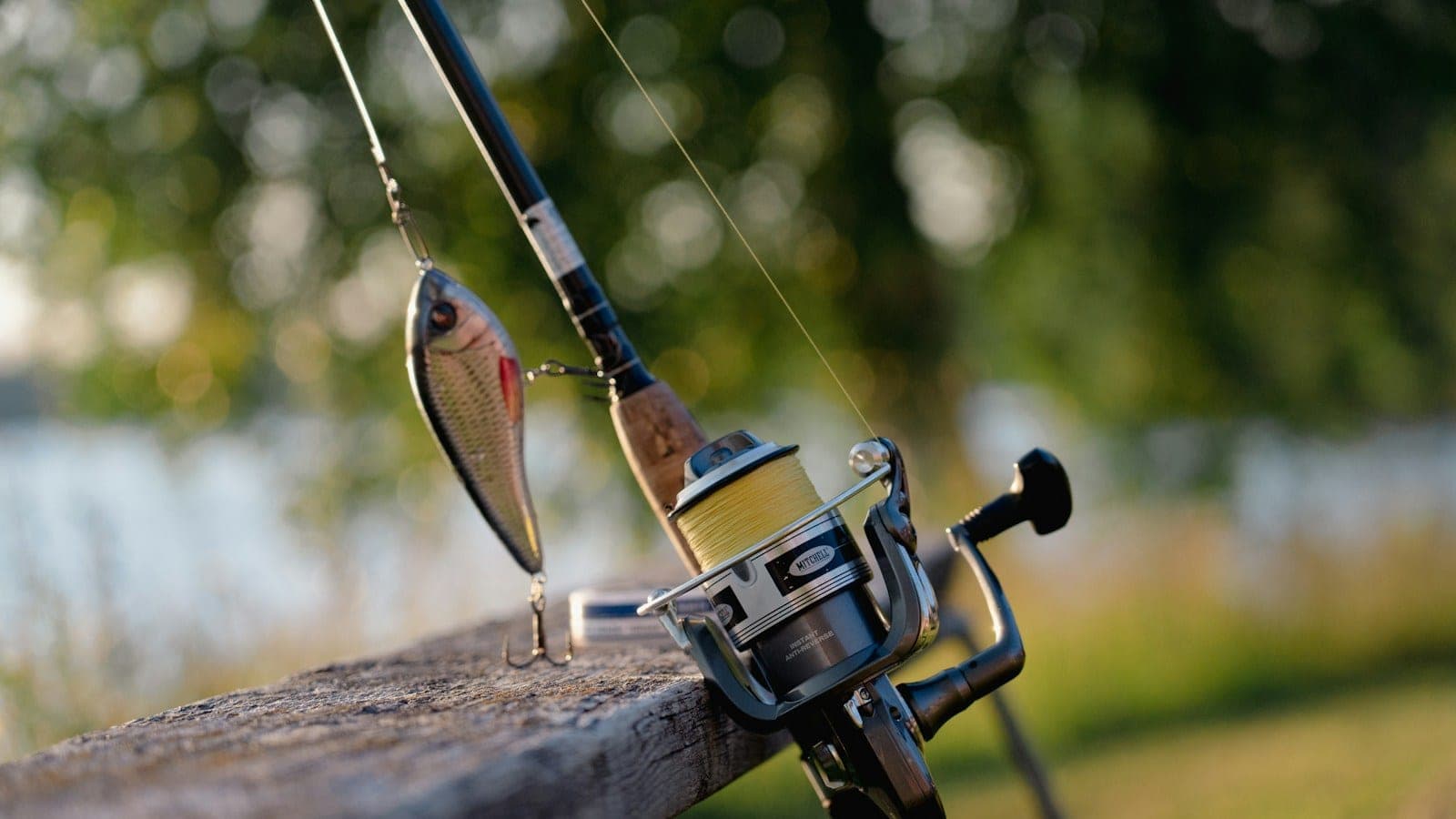
A soft plastic does nothing on its own. The jig head or sinker you pair it with sets how fast it falls, how deep it runs, how it swims and whether it snags. Choose well and a plain grub or worm looks alive; choose badly and it spins, sinks too fast or hangs in every weed. This guide covers the four jig heads most soft-plastic anglers use, the five common sinkers, the difference between lead and tungsten, and how to pick a weight for the depth, the wind and the cover in front of you.
Jig heads
A jig head is a weight molded onto a hook. The shape of the head decides what the bait does.
Round jig heads
The ball-shaped head is the all-rounder. It falls straight, hops cleanly off the bottom and suits grubs, paddle tails, small minnows and tubes for almost every species. Light heads, 1/32 to 1/8 oz, catch crappie, panfish and trout; 1/8 to 3/8 oz heads handle walleye, bass and inshore saltwater fish. Most have a small barb or collar on the shank to hold the plastic. Browse round jig heads.
Swimbait heads
A swimbait head is shaped like a baitfish's head, with a flat or keeled underside that keeps the bait upright on a steady retrieve. The hook is larger and stronger than on a round head, often 3/0 to 5/0, and many use a screw lock or wire keeper to hold a thick paddle tail in place. Use them for steady retrieves through open water, along weed edges and over points. The Berkley Fusion19 swimbait jigheads carry a 3/0 hook on a 1/4 oz head, a size that suits 3- to 4-inch paddle tails. For more on the baits themselves, read swimbaits for beginners.
Shaky heads
A shaky head has a flat or angled base and a long-shank hook with a keeper, so a finesse worm stands tail-up off the bottom when the head rests. Shake the rod tip on a slack line and the tail quivers in place. Rig the worm on the keeper, then skin-hook the point back into the plastic to make it weedless. Most anglers fish 1/8 to 1/4 oz on a medium spinning rod. The Owner Ultrahead shaky head is a 1/4 oz unpainted head, the heavier end of that range, for deeper water or a windy day.
Ned heads
A Ned head is a small mushroom-shaped head, 1/16 to 1/5 oz, made to pair with a short, buoyant Ned bait so the bait floats up off the bottom. The Z-Man Finesse ShroomZ heads in 1/10 oz are a good weight to start with. How to rig and fish them is covered in rigging soft-plastic worms.
Sinkers
Rigs that keep the hook separate from the weight use a sinker instead of a jig head. Each shape exists for a reason.
| Sinker | How it rigs | Use it for | Typical weights |
|---|---|---|---|
| Bullet | Slides on the line, point toward the rod, above a worm hook | Texas rig, flipping and punching | 1/8–2 oz |
| Drop shot | Clips or ties to the end of the line below the hook | Drop shot rig | 1/8–1/2 oz |
| Nail (neko) | Pushed into the head of a stick bait | Neko rig | 1/32–1/8 oz |
| Egg | Slides on the main line above a swivel | Carolina rig, slip-sinker bait rigs | 1/4–1 oz |
| Split shot | Pinched onto the line | Split shot rig, light finesse, bobber rigs | Small shot up to about 1/8 oz |
Bullet weights
The cone shape slides through weeds and wood with the point leading. Leave it loose for open water, or peg it with a rubber stop or a toothpick when you fish thick cover so the weight and the bait stay together. See bullet weights.
Drop-shot weights
The weight sits at the end of the line, 12 to 24 inches below a nose-hooked plastic, so the bait hovers above the bottom. Many drop-shot weights pinch the line in a small clip or swivel eye, so you can slide them to change the leader length, and the line can pull free of the clip if the weight wedges in rock, so you keep the hook. A slim cylinder shape snags less in rock; a round or teardrop shape suits smooth bottoms. The Reaction Tackle drop shot weights are 1/4 oz pencil sinkers, a weight that covers most drop shotting in 10 to 30 feet.
Nail weights
A small pin of lead or tungsten pushed into the head of a stick bait for a neko rig, or into the body of a plastic to make it fall faster and level. See nail and neko weights.
Egg sinkers
An oval weight with a hole through the middle. On a Carolina rig, slide an egg sinker and a bead onto the main line, tie on a swivel, and add a 2- to 4-foot leader to a worm hook. The weight drags along the bottom while the plastic follows behind. See egg sinkers.
Split shot
Small round weights pinched onto the line. A split shot rig is the lightest soft-plastic rig there is: one or two shot 12 to 18 inches above a small worm on a light hook. Choose removable shot with "ears" so you can move or take it off without cutting the line. See split shot.
Lead or tungsten
Tungsten is about 1.7 times as dense as lead, so a tungsten weight is much smaller than a lead one of the same weight. That changes three things:
- Size and snags. A smaller weight slips through weeds, brush and rock more easily and hangs up less.
- Feel. Tungsten is hard where lead is soft, so it transmits more of what the bottom is made of: you can tell rock from mud from grass through the rod.
- Sound. A hard tungsten weight clicks against rock and against a glass bead, which some anglers believe draws strikes.
Lead still has a place. It is soft enough to peg with a toothpick and to crimp, and for open water and sand the size difference matters less. Several states, mostly in the Northeast, restrict small lead sinkers or jig heads to protect loons and other water birds, so check your local rules. The Reaction Tackle tungsten worm weights come in weights from 1/16 to 1/2 oz, enough to cover a Texas rig from shallow water to deep.
How heavy to go
Use the lightest weight that does the job. A lighter bait falls more slowly, which looks more natural and gives fish more time to bite, and it snags less. Then add weight for each of these.
Depth
A rough guide for a Texas rig or a jig head fished on the bottom:
| Depth | Starting weight |
|---|---|
| Under 10 ft | 1/8–3/16 oz |
| 10–20 ft | 1/4 oz |
| 20–30 ft | 3/8 oz |
| Over 30 ft | 1/2 oz or more |
If you cannot feel the bait touch bottom, or it takes too long to get there, go up one size.
Wind and current
Wind puts a bow in your line, and current lifts the bait. Both make it harder to feel the bottom and to stay in contact with the bait. On a windy day or in a river, go up one or two sizes. When the wind drops, go back down.
Cover
- Open water, sand and gravel: light weights and round heads. Nothing to snag, so fall rate is all that matters.
- Scattered weeds and brush: a bullet weight or a weedless head, pegged if it keeps sliding off the bait.
- Thick grass and weed mats: heavy pegged weights, 1 to 2 oz, to punch through the top. Tungsten helps here because the smaller weight slides through.
- Rock: cylinder drop-shot weights, Ned heads and shaky heads, which many anglers find wedge less than a round head.
Matching hook size to the plastic
The hook must match the bait as well as the weight. As a starting point:
- 2- to 3-inch grubs and minnows: a size 2 to 1/0 hook on a round head.
- 4- to 5-inch worms and paddle tails: a 1/0 to 3/0 hook.
- 6- to 7-inch worms and larger swimbaits: a 3/0 to 5/0 hook.
Lay the plastic beside the hook before you rig it: the hook should come out about a third to half of the way down the body. For more on hook sizes and styles, read fishing hooks decoded.
A starter assortment
- Round jig heads in 1/8 and 1/4 oz.
- Swimbait heads in 1/4 and 3/8 oz.
- Bullet weights from 1/8 to 1/2 oz, lead or tungsten.
- Drop-shot weights in 1/8 and 1/4 oz.
- A dial of removable split shot.
Browse all jig heads and weights and sinkers, and keep them sorted by weight; organizing a tackle box shows one way.