Technique · 7 min read
Jig types explained: flipping, football, swim and finesse
How head shape, weed guard, hook and weight set each bass jig apart, and where, when and with which trailer to fish it.
Updated
First Cast Fishing earns a commission when you buy through links on this site, at no extra cost to you. Affiliate disclosure
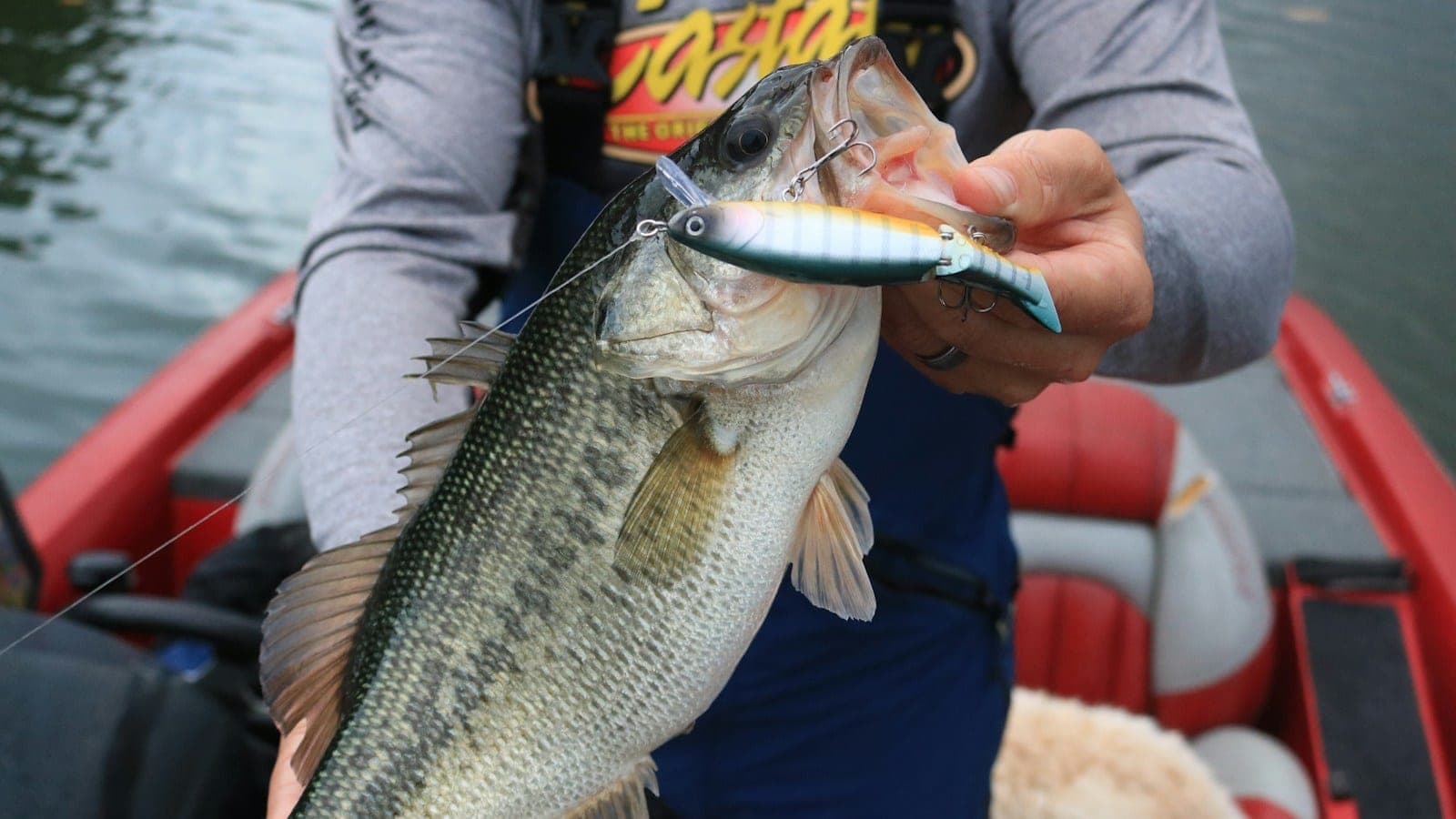
A skirted jig catches big bass in every season, and the wall of jigs in a tackle shop looks confusing until you know what sets them apart. Four parts decide what a jig is for: the shape of the head, the weed guard, the hook and the weight. Change those and the same basic lure goes from crawling through a brush pile to grinding across a rocky ledge or swimming over grass. This guide covers the four bass jigs most anglers carry (flipping, football, swim and finesse), plus hair jigs briefly: how each one is built, where it is fished, and which trailer goes on it.
What makes one jig different from another
- Head shape decides how the jig moves over the bottom. A narrow, bullet-shaped head slips through branches and grass. A wide football head rocks and wobbles over rock. A pointed head with the line tie at the nose swims level.
- Weed guard is the bundle of stiff fibers in front of the hook point. A thick guard keeps the hook clean in wood and brush; a thin one hooks fish more easily in open water. You can trim or thin it to suit the cover.
- Hook size and wire match the line and the cover. Heavy jigs for thick cover carry stout 4/0 to 5/0 hooks built for heavy line and hard hooksets. Finesse jigs carry lighter, smaller hooks that a spinning rod can drive home.
- Weight sets the fall rate and the depth. Lighter jigs fall slowly and look natural; heavier jigs reach the bottom quickly, hold it in wind and current, and punch through cover.
Most bass jigs have a silicone skirt, and almost every one is fished with a soft plastic trailer on the hook.
Flipping jigs
A flipping jig is built for close-range work in heavy cover: laydowns, brush piles, docks, matted grass and flooded bushes.
- Head: compact and bullet- or arkie-shaped, so it slips through branches and stems without wedging.
- Weed guard: thick and stiff.
- Hook: a heavy-wire 4/0 or 5/0 that will not bend open on heavy line.
- Weight: 3/8 to 1 oz. A 1/2 oz jig is the usual starting point; go to 3/4 or 1 oz to get through thick grass.
How to fish it: pitch or flip it into a gap in the cover from 10 to 25 feet away, let it fall on a semi-slack line, and watch the line. Many bites come as the jig falls. If nothing happens when it lands, shake it in place, hop it once or twice, then reel up and pitch to the next spot. Work cover fast and make many presentations.
The Strike King Hack Attack Heavy Cover Jig is a 1/2 oz heavy-cover jig in a green pumpkin craw color, the weight to start with around wood, docks and sparse grass.
Trailer: a craw or creature bait, 3.5 to 4.5 inches. The trailer adds bulk and slows the fall.
Football jigs
A football jig has a wide head shaped like an American football lying on its side. As you drag it, the head rocks from side to side and knocks against stones, much like a crawfish backing away.
- Head: wide football shape, often with the line tie at the front.
- Weed guard: lighter than a flipping jig's, because rock does not grab a hook the way wood does.
- Hook: usually a 4/0 or 5/0 with a wide gap, so the point clears the wide head.
- Weight: 3/8 to 1 oz. Use 1/2 oz in 10 to 20 feet of water, 3/4 oz deeper or in current.
How to fish it: cast it out on rocky points, ledges, humps and riprap, let it reach the bottom and drag it slowly with the rod tip held low, sweeping from about 9 o'clock to 11 o'clock. Reel up slack and drag again. A short hop now and then helps when the bottom is uneven. It is a common choice for deep bass in summer and for smallmouth on rock most of the year.
The Strike King Tour Grade Football Jig is a 3/8 oz football jig, the light end of the range, for rock in shallower water or when you want a slower fall.
Trailer: a craw with claws that flap, or a double-tail grub. Brown, green pumpkin and purple colors imitate crawfish.
Swim jigs
A swim jig is a jig you reel instead of hopping. It is fished like a spinnerbait or a swimbait, but it has a slimmer profile and comes through grass more cleanly than either.
- Head: pointed or bullet-shaped, with the line tie at the very nose so the jig swims level.
- Weed guard: light, sometimes thinned.
- Hook: a 4/0 or 5/0 with a straight shank.
- Weight: 1/4 to 1/2 oz, with 3/8 oz a good place to start.
How to fish it: cast past grass edges, docks and laydowns and reel steadily, just fast enough to keep the jig a foot or two under the surface. Twitch the rod tip now and then to make the skirt flare. In grass, let it tick the tops and rip it free when it catches; that often triggers a strike.
The Strike King Tour Grade Swim Jig is a 3/8 oz swim jig in a bluegill color, a pattern that matches the forage around grass and docks.
Trailer: a 3.5- to 4.5-inch paddle-tail swimbait or a double-tail grub. White and shad colors imitate baitfish; green and blue bluegill colors work around grass. For more on paddle tails, see swimbaits for beginners.
Finesse jigs
A finesse jig is a smaller, lighter jig with a compact skirt. It suits cold water, clear water and fish that have seen every big jig in the lake.
- Head: small, often round or a small football.
- Weed guard: thin.
- Hook: a lighter 2/0 to 3/0 that a spinning rod can set.
- Weight: 1/8 to 5/16 oz.
How to fish it: cast it to rock, docks and the edges of cover and fish it slowly: small hops, slow drags and long pauses. Finesse jigs catch smallmouth and spotted bass especially well, and they are a strong choice in winter, when bass move less and want a smaller bait.
The Strike King Bitsy Bug is a 1/4 oz mini jig, sized for a small craw trailer.
Trailer: a 2.5- to 3-inch craw or a small chunk.
Hair jigs
Before silicone skirts, jigs were tied with hair. Hair jigs are still made with bucktail, marabou, rabbit fur or synthetic fibers, and they move differently from silicone: the hair breathes and pulses at rest instead of flaring. Bass anglers use small 1/8 to 3/8 oz hair jigs in cold, clear water, swimming them slowly or hopping them along rock, mostly for smallmouth. Larger bucktail jigs are a saltwater staple; see bucktail jigs for inshore saltwater.
Choosing trailers
The trailer changes how fast a jig falls and how it moves. A bulky trailer with flapping claws slows the fall and adds action; a slim chunk falls faster and moves less.
- Flipping and football jigs: a craw or creature bait. The Zoom Ultra-Vibe Speed Craw is a 3.5-inch craw in green pumpkin purple, a size that fits 3/8 to 1/2 oz jigs.
- Swim jigs: a paddle-tail swimbait or a double-tail grub.
- Finesse jigs: a small craw or chunk.
- Cold water: a chunk trailer, which does not move much on its own and makes the jig fall slowly.
Match the trailer's color to the skirt, or pick a slightly different shade for contrast. Thread it on straight so the jig does not roll. The creature baits and craws guide covers trailer shapes in more detail.
Rods, line and colors
| Jig | Rod | Line |
|---|---|---|
| Flipping, 1/2–1 oz | 7'3"–7'6" heavy casting, fast action | 50–65 lb braid in grass, 20–25 lb fluorocarbon in wood |
| Football, 3/8–1 oz | 7'0"–7'3" medium-heavy to heavy casting | 12–17 lb fluorocarbon |
| Swim, 1/4–1/2 oz | 7'0"–7'3" medium-heavy casting | 15–20 lb fluorocarbon, or 40–50 lb braid in grass |
| Finesse, 1/8–5/16 oz | 6'10"–7'2" medium spinning, or medium casting | 8–12 lb fluorocarbon, or braid with a fluorocarbon leader |
Green pumpkin and black-and-blue cover most water: green pumpkin in clear water, black-and-blue in stained or dark water. Brown and purple mixes suit rocky lakes with crawfish. For the reasoning behind those choices, see matching lure color to water clarity, and for rod terms, rod power and action explained.
If you only buy one, start with a 3/8 to 1/2 oz jig in green pumpkin with a craw trailer. It can be pitched to cover, dragged on rock and hopped off docks. Add a swim jig and a football jig as the water you fish asks for them. Browse every style in jigs.