Buying guide · 7 min read
Rod power and action explained
What the power, action, length and ratings printed on a rod mean, and how to match them to the way you fish.
Updated
First Cast Fishing earns a commission when you buy through links on this site, at no extra cost to you. Affiliate disclosure
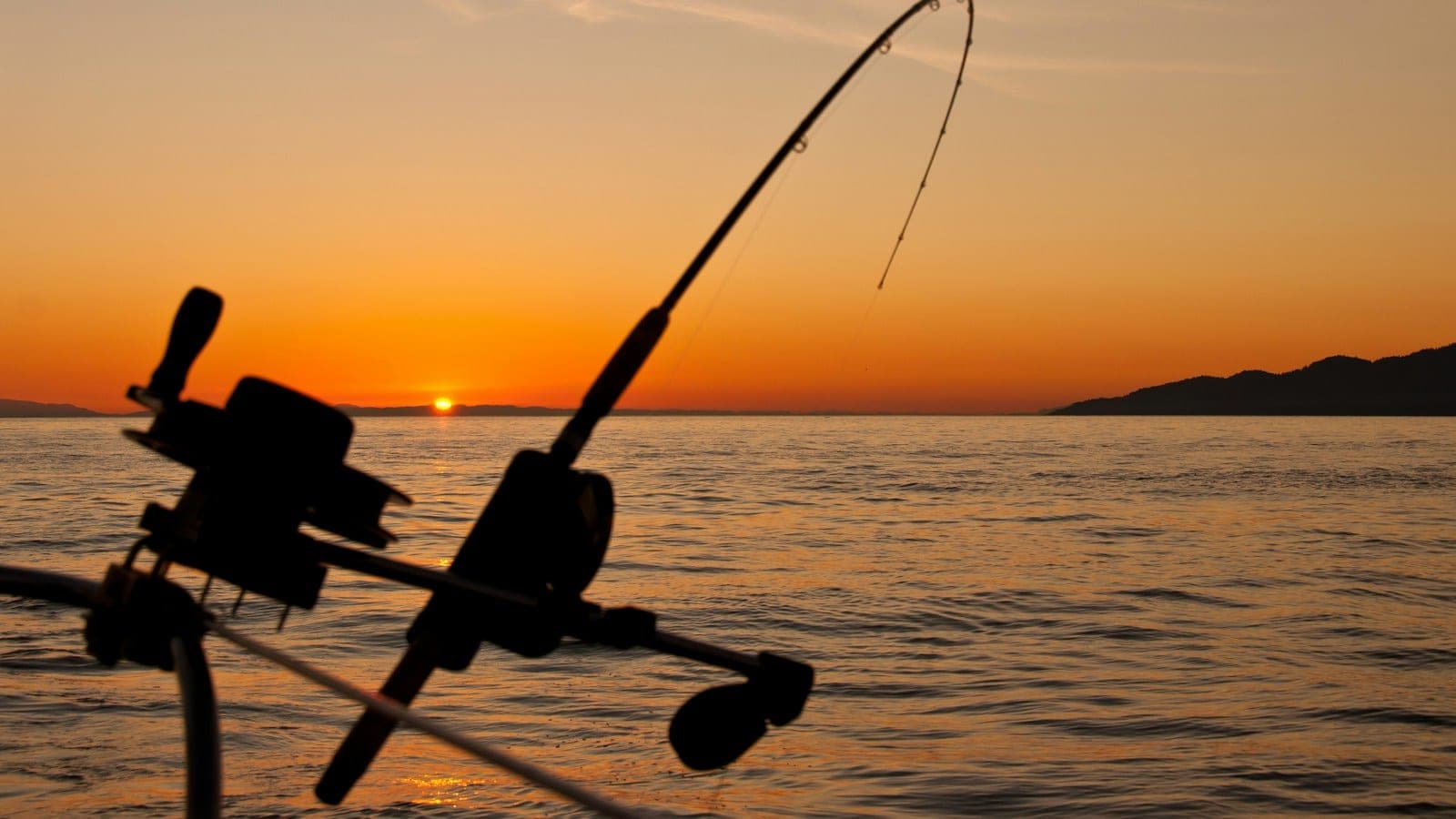
Every rod has a few short codes printed just above the handle: something like "7'0" M F, line 8–17 lb, lure 1/4–5/8 oz". Those codes tell you more about how the rod will fish than the brand or the color, but they are easy to misread. This guide explains power and action (two different things that are often confused), the line and lure ratings, and rod length, then matches all of them to common techniques in one table. It ends with the difference between spinning and casting rods.
Power: how much it takes to bend the rod
Power is how much force it takes to bend the rod. A heavy rod needs a lot of pull to bend; an ultralight bends under almost nothing. Power decides the size of the lures and line a rod handles and the size of the fish and cover it can pull against.
Most rods use the same seven names, from lightest to heaviest. The ranges below are typical, not fixed:
| Power | Typical line | Typical lures | Common uses |
|---|---|---|---|
| Ultralight (UL) | 2–6 lb | 1/32–1/8 oz | Panfish, stream trout, tiny jigs and spinners |
| Light (L) | 4–8 lb | 1/16–1/4 oz | Trout, crappie, small bass baits |
| Medium-light (ML) | 6–12 lb | 1/8–3/8 oz | Finesse bass rigs, walleye jigs |
| Medium (M) | 8–14 lb | 1/4–5/8 oz | All-round bass, walleye, inshore |
| Medium-heavy (MH) | 10–20 lb | 3/8–1 oz | Texas rigs, spinnerbaits, jigs |
| Heavy (H) | 15–30 lb, or 50–65 lb braid | 1/2–1 1/2 oz | Heavy cover, big swimbaits, pike, catfish |
| Extra heavy (XH) | 20–40 lb, or 65 lb+ braid | 1 oz and up | Punching mats, big musky lures, heavy saltwater |
There is no industry standard behind these names. One brand's medium is another's medium-light, so trust the printed line and lure ratings over the power label when you compare rods from different makers.
Action: where the rod bends
Action describes where along its length the rod bends when you load it. Power is how hard it is to bend; action is where the bend happens. The two are independent: you can have a medium-power rod with a fast action, or a heavy rod with a moderate action.
- Extra fast: bends mainly in roughly the top quarter. The lower rod stays stiff, so hook sets are instant and you feel every tick on the bottom. Suits single-hook baits fished slowly: jigs, Texas rigs, drop shots.
- Fast: bends in roughly the top third. The most common action, and the most versatile. It sets hooks quickly but still casts light lures well.
- Moderate-fast: bends through the top 40 percent or so. A compromise that handles both single hooks and trebles.
- Moderate (medium): bends through the top half. Slower to load, so fish get a moment to take the bait, and treble hooks are less likely to tear out. The classic action for crankbaits and other treble-hook baits.
- Slow: bends deep into the butt. Casts tiny lures smoothly and makes small fish fun on light line; less hook-setting power.
A simple rule: single hooks that need a hard hook set want a faster action; treble hooks and baits fish swallow on the move want a slower one. Fiberglass and composite rods naturally bend further than graphite, which is why glass rods are still used for cranking.
Reading the ratings on the blank
The printed ratings are the rod maker telling you what the rod was designed to throw and fight.
- Line rating (for example 8–17 lb): the monofilament or fluorocarbon range the rod is built around. Lighter line than the bottom number risks breaking off on hook sets, because the rod is too stiff to cushion it. Heavier line than the top number with a tight drag can let you break the rod. Braid is the exception: it is so thin for its strength that many anglers put 20 to 30 lb braid on a rod built for 10 to 17 lb mono, with the drag set to suit the rod.
- Lure rating (for example 1/4–5/8 oz): the weight range the rod casts well. Below it the rod will not bend enough to fling the lure; above it, a hard cast can overload the tip and snap it.
- Length, given in feet and inches (7'0") or sometimes in meters on imported rods (2.13 m is 7 feet).
- Pieces, sometimes. A one-piece rod can be slightly lighter and more sensitive; a two-piece or travel rod is easier to carry.
Aim for the middle of both ranges for the lures and line you will use most.
Length
Length trades accuracy for distance and leverage.
- 5'6" to 6'6": short, accurate casts, skipping under docks, fishing from kayaks and small boats, kids' rods and tight streams.
- 6'6" to 7'0": the all-round range. A 7'0" rod suits most bass, walleye and inshore fishing.
- 7'0" to 7'6": longer casts, more line picked up on a hook set at distance, and more leverage for steering fish out of cover. Most crankbait and flipping rods sit here.
- 7'6" to 9': long casts with light baits for steelhead and salmon, catfish rods, and swimbait and musky rods.
- 9' to 12'+: surf rods, which need the length to throw heavy sinkers past the breakers. See your first surf fishing setup.
Longer is not always better. A 7'6" rod is clumsy under trees on a small creek, and a short rod makes a long cast harder.
Matching the rod to the technique
The table below is a starting point. Anglers argue about every line of it, and plenty catch fish on rods outside these ranges.
| Technique | Power | Action | Length | Reel |
|---|---|---|---|---|
| Panfish and stream trout, small jigs and spinners | UL–L | Moderate to fast | 5'6"–6'6" | Spinning |
| Drop shot, Ned rig, finesse plastics | ML–M | Fast to extra fast | 6'10"–7'2" | Spinning |
| Wacky rig, small swimbaits, general use | M | Fast | 7'0" | Spinning |
| Crankbaits and squarebills | M–MH | Moderate to moderate-fast | 7'0"–7'6" | Casting |
| Jerkbaits | M–MH | Fast to moderate-fast | 6'6"–7'0" | Casting or spinning |
| Spinnerbaits and bladed jigs | MH | Moderate-fast to fast | 7'0"–7'3" | Casting |
| Topwater walkers and poppers | M–MH | Moderate-fast | 6'6"–7'0" | Casting |
| Texas rigs and jigs | MH–H | Fast to extra fast | 7'0"–7'3" | Casting |
| Frogs and punching | H–XH | Fast | 7'3"–7'11" | Casting |
| Big swimbaits | H–XH | Moderate-fast | 7'6"–8'0" | Casting |
| Catfish with bait | MH–H | Moderate | 7'0"–8'0" | Either |
| Surf bait fishing | MH–H | Moderate-fast | 9'–12' | Spinning or conventional |
If you fish one rod for everything, a 7'0" medium-power, fast-action spinning rod covers more of this table than any other single choice. The KastKing Perigee II is a 7-foot, medium-power, fast-action spinning rod of that kind.
For small trout and panfish, an ultralight makes 1/16 oz spinners cast and gives small fish a fair fight. The Okuma Celilo is a 6'6" ultralight spinning rod for 2 to 6 lb line.
For bass anglers adding a second rod, a 7'0" to 7'3" medium-heavy, fast-action casting rod handles Texas rigs, jigs and spinnerbaits. The Abu Garcia Vengeance is a one-piece 7'3" medium-heavy, fast-action casting rod in that range.
For the lures themselves, see jig types: flipping, football, swim and finesse, spinnerbaits, chatterbaits and buzzbaits and how to choose a crankbait by depth.
Spinning rods versus casting rods
A spinning rod and a casting rod with the same power and action still are not interchangeable.
- Spinning rods have large guides on the underside of the rod, starting with a wide first guide to gather the loops of line coming off a spinning reel. They hang below the rod as you fish. They suit light lures, light line and finesse rigs.
- Casting rods have small guides on top of the rod and usually a trigger under the reel seat for your finger. They take baitcasting reels and suit heavier lures, heavier line and repeated, accurate casts.
A spinning reel on a casting rod, or the other way around, will not cast properly and stresses the guides. Choose the reel first, then the matching rod. If you are deciding between the two, read baitcaster or spinning reel: which to buy first.
Putting it together
- Pick the technique or species you will fish most.
- Find its row in the table for power, action and length.
- Check the printed line and lure ratings against the line and lures you plan to use.
- Choose a spinning or casting rod to match your reel.
Browse spinning rods, casting rods, crappie and panfish rods and the rest of the rods, or start with a spinning combo if you need the reel too.