Technique · 7 min read
Topwater lures: poppers, walkers, prop baits and frogs
How each surface bait moves, where it fits, the cadence to work it, and when to set the hook after the blowup.
Updated
First Cast Fishing earns a commission when you buy through links on this site, at no extra cost to you. Affiliate disclosure
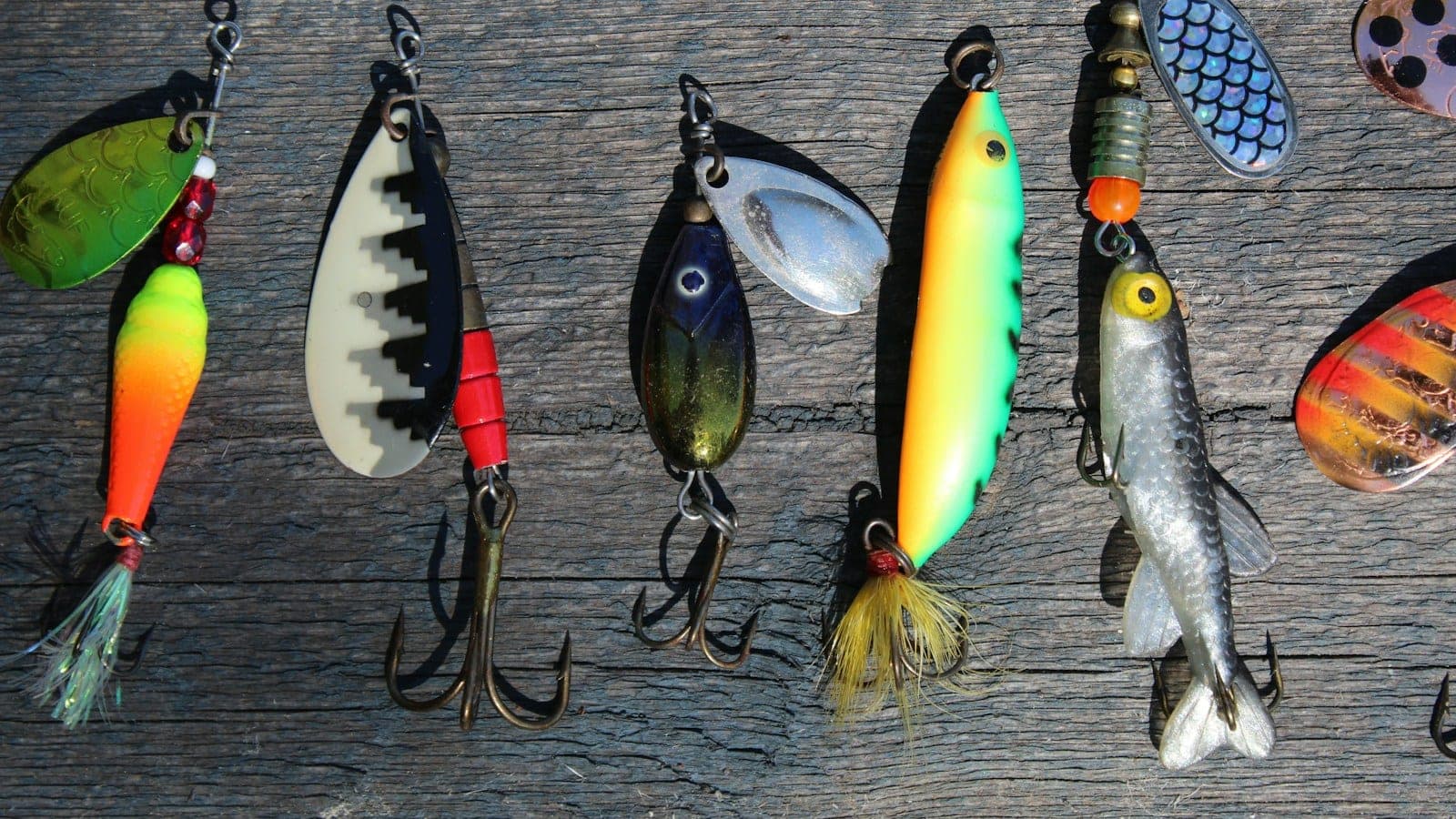
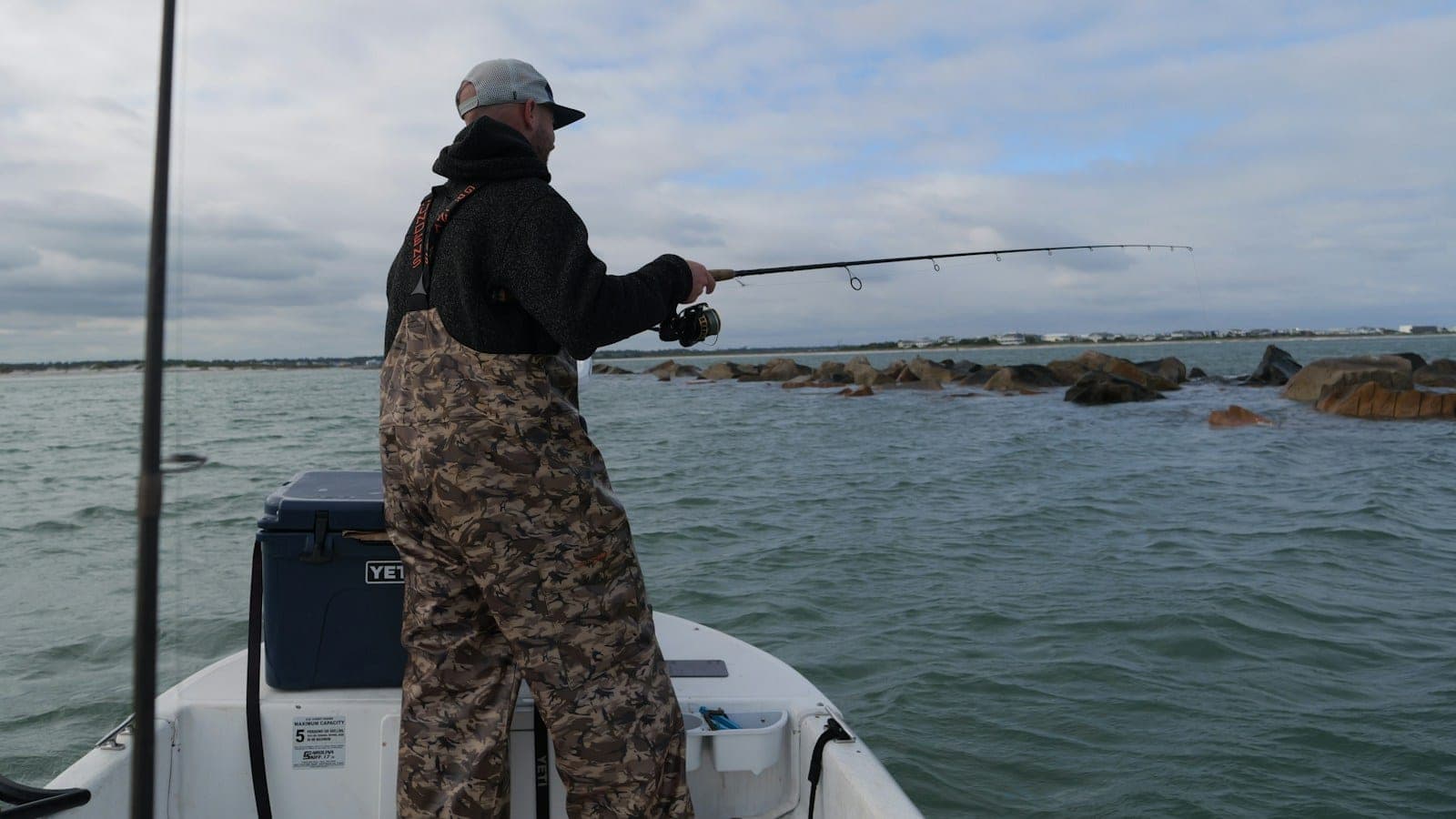
Few moments in fishing match a bass coming up to crush a lure on the surface. Topwater baits are also some of the most specific baits you can buy: each one moves in its own way and suits its own water. This guide covers the five main kinds (poppers, walking baits, prop baits, wake baits and hollow frogs), how each one moves, the cover and conditions that suit it, the cadence to fish it, when to set the hook, and what line to use.
When topwater works
Surface baits catch fish whenever fish look up, but some conditions make it far more likely.
- Water temperature. From about 60°F up, from late spring through fall. Some anglers start in the mid-50s on warm, calm afternoons.
- Light. Dawn, dusk and overcast days are prime. On bright days, fish shade: docks, overhanging trees, mats of vegetation.
- Surface. Calm water suits subtle baits like poppers and walkers worked slowly. A light chop calls for louder baits like prop baits and plopper-style lures that throw more noise.
- Fish activity. Bass chasing baitfish on the surface, bream beds in spring, and shad schools in fall are all invitations.
Poppers
A popper has a cupped or flat face. When you snap the rod tip down, the face catches water and throws a splash with a "bloop" sound, like a fish feeding at the surface.
Where: calm water around docks, laydowns, weed edges and spawning areas, and anywhere fish are holding tight to one target. A popper stays in place well, so you can work it slowly over one spot.
Cadence: let the bait sit after it lands until the rings fade. Then give it one or two short, sharp pops with the rod tip pointed down and a little slack in the line. Pause one to five seconds. Pop harder and faster when fish are active, softer and slower when they are not.
The Rebel Pop-R is a 1/4 oz, 2.5-inch popper, a size that suits bass and big panfish.
Walking baits
A walking bait, also called a pencil bait or stickbait, is a cigar-shaped plug with no lip. Worked correctly, it glides from side to side in a zigzag known as walking the dog.
Where: open water, points, flats and over submerged grass, and wherever fish are chasing baitfish. A walker covers water quickly and draws fish from a distance.
Cadence: walking the dog takes practice, but the motion is simple.
- Point the rod tip down toward the water.
- Twitch the rod tip down and back toward you in short, even snaps.
- Between each snap, give back a little slack. The slack is what lets the bait turn; a tight line pulls it straight.
- Reel only enough to take up the extra slack.
Done right, the nose swings left, then right, then left. A steady rhythm draws fish; a sudden pause or a change of pace often triggers the strike.
The Heddon Super Spook Jr. is a 1/2 oz walking bait in bone, the smaller version of the full-size Super Spook and a middle ground between small baits for pressured water and 5-inch walkers.
Prop baits
A prop bait has a propeller at the tail, or at both ends. A twitch makes the props spin and sputter, spraying a little water and making a buzzing sound.
Where: shallow banks, grass edges, flats and the outside of cover, in calm to lightly rippled water.
Cadence: twitch, pause, twitch. A single prop at the tail, like the Heddon Torpedo, sputters in place with short twitches and is easy for beginners to work. Double-prop baits make more noise; twitch them, or pull them slowly and steadily so both props keep turning.
Plopper-style baits have a rotating, segmented tail instead of a prop. Reel them steadily and the tail clicks and slaps along behind the body. They are loud and simple to fish, which makes them a good choice for choppy water and for covering open flats. Browse them among the prop baits.
Wake baits
A wake bait looks like a shallow crankbait with a wide, flat lip and a buoyant body. It wobbles just under the surface and pushes a V-shaped wake without breaking the surface.
Where: calm water at dawn and dusk, over grass, along riprap and around shallow cover, when fish are near the surface but will not hit a noisy bait.
Cadence: cast and reel slowly and steadily, just fast enough to keep the bait wobbling. The Strike King KVD 2.5 Wake Bait is a 3/8 oz wake bait that suits this slow retrieve.
Hollow-body frogs
A hollow frog is a soft, hollow plastic body with a double hook whose points lie tight against its back. The body collapses when a fish bites, exposing the hooks. Until then, the hooks are shielded, so a frog slides over lily pads, matted grass and floating mats where no other bait can go.
Where: heavy surface cover: lily pads, slop, matted hydrilla, overhanging branches and the shade under docks. Frogs work through summer into early fall.
Cadence: over thick mats, a steady twitch-and-crawl so the frog hops from pad to pad. Over open pockets, walk it like a walking bait with short twitches, and pause in every hole in the cover. Popping frogs, with a cupped face, can be fished like a popper along edges.
The Spro Bronzeye Frog 65 is a 5/8 oz, 2.5-inch hollow frog, a size for casting into mats.
Before you fish a frog, trim its rubber legs so they do not tangle in the hook, and squeeze out any water that gets inside so it keeps floating. Soft frogs and toads with paddle legs are a separate kind: rigged on a weedless hook and reeled steadily, they churn across the surface like a buzzbait. See soft frogs and toads and the buzzbait section for that style.
Setting the hook on topwater
The hardest part of topwater fishing is not setting the hook too soon. A bass that explodes on a bait often misses it, or pushes it away with the water it moves. If you jerk at the splash, you pull the bait away and lose the chance of a second strike.
- Treble-hook baits (poppers, walkers, props, wake baits): wait until you feel the fish's weight on the line, then sweep the rod to the side and reel at the same time. A hard, upward jerk tears treble hooks free.
- Frogs: count a beat, "one-two," to let the fish turn down with the frog. Then reel down and set hard with a heavy rod, because the hook has to drive through the plastic and into the fish.
- A missed strike: leave the bait where it is and twitch it gently. Fish often come back.
Rod and line
| Bait | Rod | Line |
|---|---|---|
| Poppers, walkers, props, wake baits | 6'6" to 7'0" medium or medium-heavy, moderate-fast action | 12 to 17 lb monofilament, or 30 lb braid with a mono leader |
| Hollow frogs | 7'0" to 7'4" heavy, fast action | 50 to 65 lb braid |
Monofilament floats, so it does not pull the bait's nose under, and its stretch helps keep treble hooks pinned when a fish jumps. That makes it the classic topwater line.
Braid floats too and has no stretch, which gives long casts and solid hook sets. It is the only real choice for frogs, because thick cover and heavy fish demand line that cuts through vegetation. With walking baits, braid can loop around the front hook; a few feet of mono leader helps prevent that.
Fluorocarbon sinks, which drags the front of a popper or walker down and spoils its action. Leave it for other baits. The guide to mono, fluoro or braid explains the rest, and rod power and action covers why slower actions suit trebles.
Choosing a topwater
- Calm water, fish near one target: a popper.
- Open water, fish chasing baitfish: a walking bait.
- Shallow banks and grass edges, light ripple: a prop bait. Choppy water: a plopper-style bait.
- Calm water, fish that will not commit: a wake bait.
- Lily pads, mats and slop: a hollow frog.
For color, a bone or white bait shows from below in most water, and black shows up most clearly at night and on dark days; see matching lure color to water clarity. Browse all topwater lures when you are ready.